




Desserts

Mint Chip Ice Cream

March 19, 2015

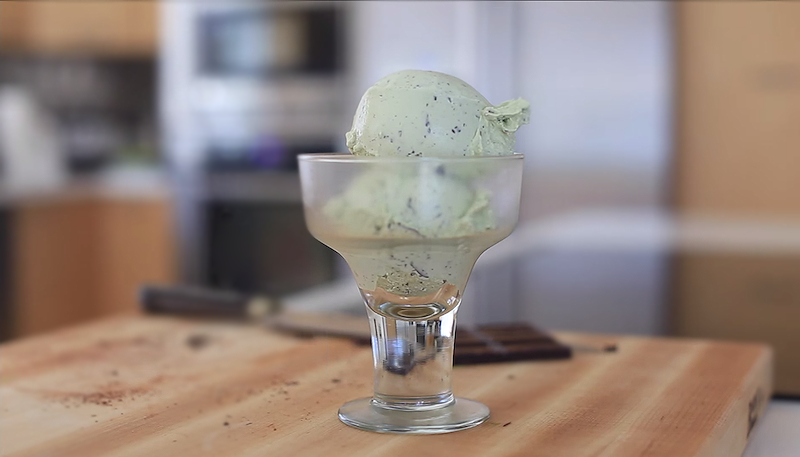
Continuing #ChocolateWeek with this rich, fresh, and all- natural Mint Chip Ice Cream. This is an easy recipe from start to finish and can be made entirely from scratch, with ease.

You’ll be shocked at just how easy and great this recipe is; so don’t be surprised if it’s gone in one day.  If your family is anything like mine, it will be!
Screen Shot 2015-03-17 at 9.32.20 AM

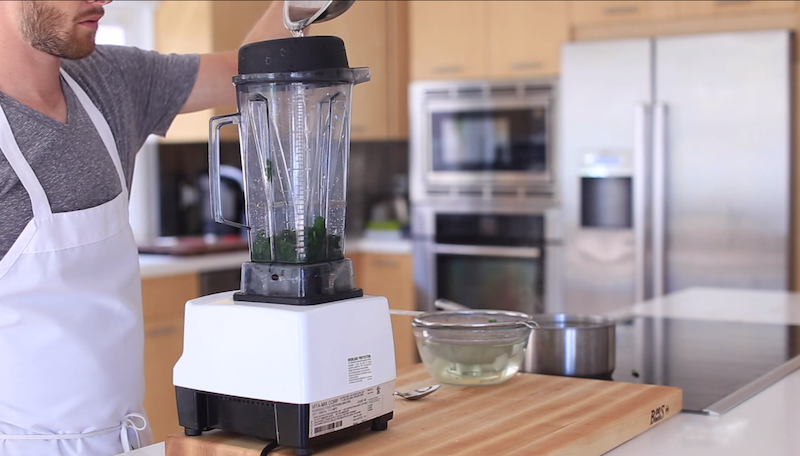
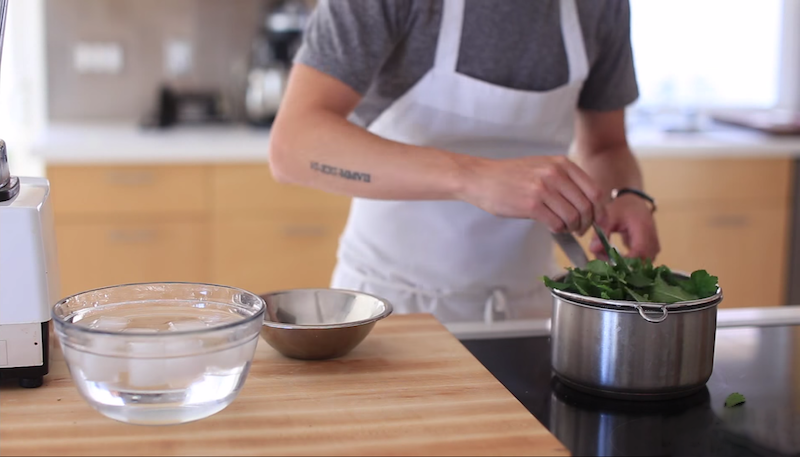
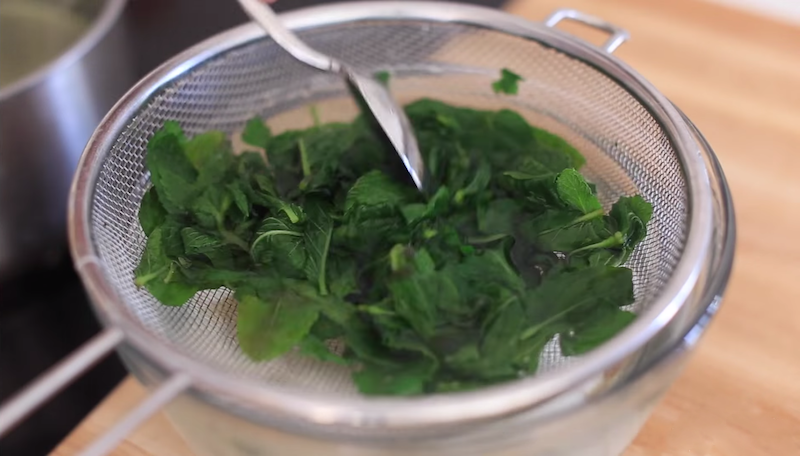
Start by blanching 1 1/2 cups of mint and 1 cup of picked parsley for about 30 seconds.
Screen Shot 2015-03-17 at 9.33.04 AM

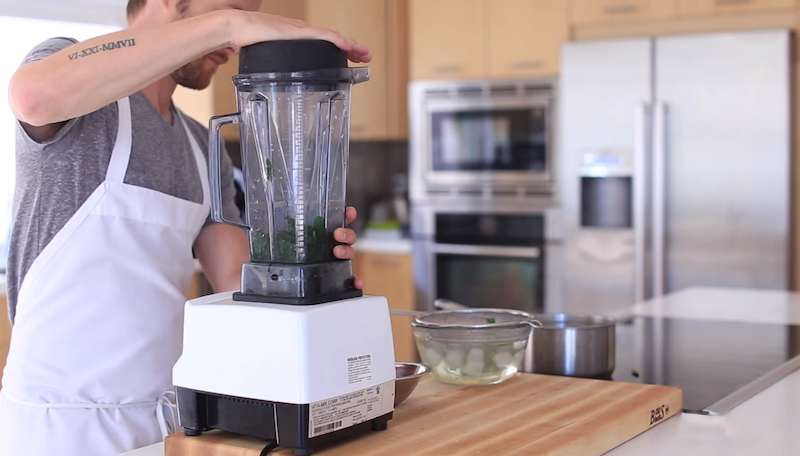
Remove greens from heat and immediately immerse them into an ice bath to stop the cooking process.
Screen Shot 2015-03-17 at 9.34.18 AM

Transfer the greens into a blender…

Screen Shot 2015-03-17 at 9.34.55 AM

…adding a few tablespoons of cold water.
Screen Shot 2015-03-17 at 9.35.27 AM

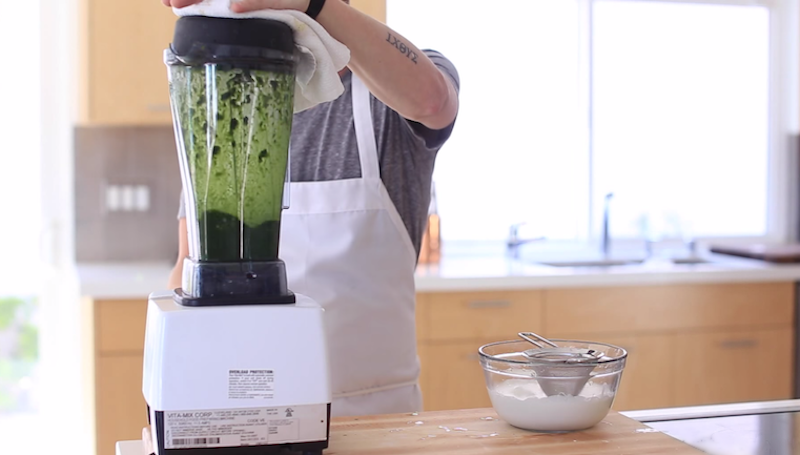
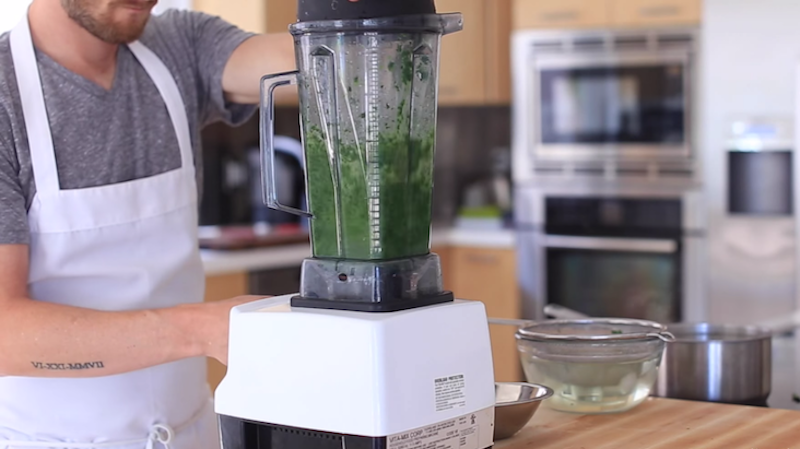
Blend on high speed for 2-3 minutes. 

Screen Shot 2015-03-17 at 9.35.43 AM

Once you have a nice puree blending is complete.
Screen Shot 2015-03-17 at 9.36.12 AM

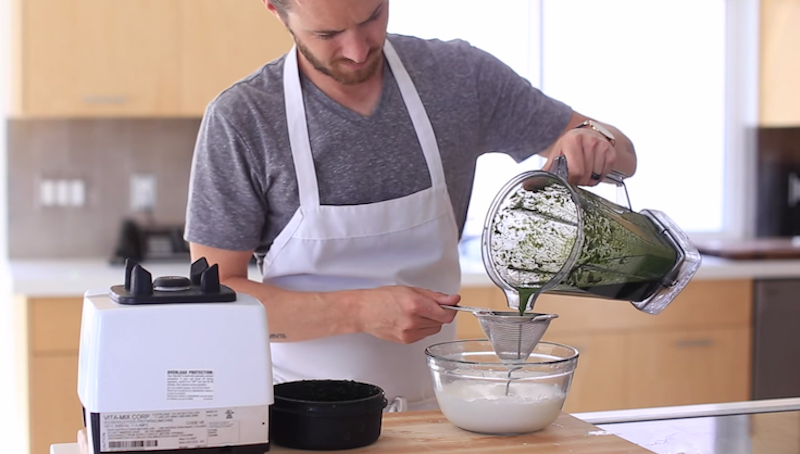
Strain the greens mixture over 2 cups of heavy whipping cream.
Screen Shot 2015-03-17 at 9.37.37 AM

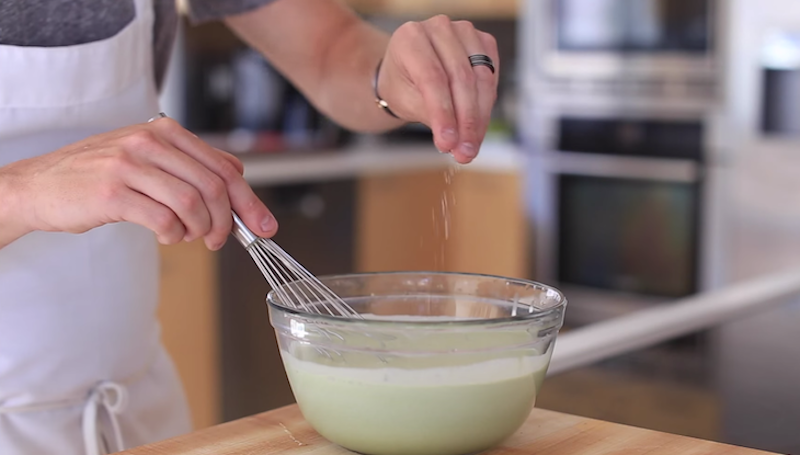
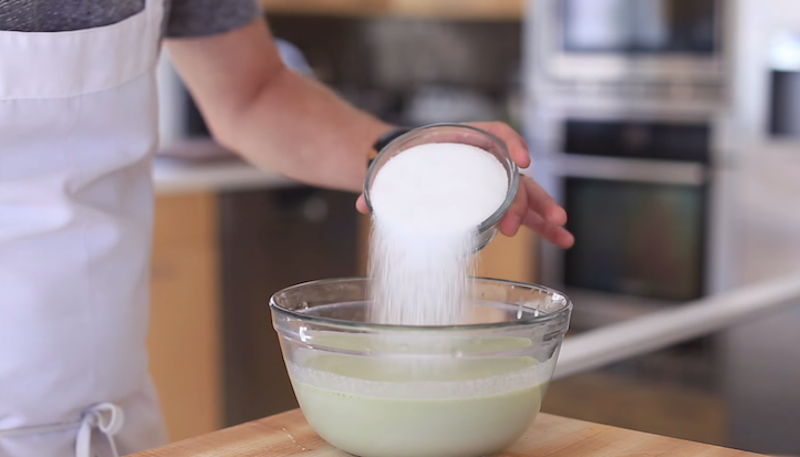
Add 3/4 cups of sugar…

Screen Shot 2015-03-17 at 9.38.18 AM

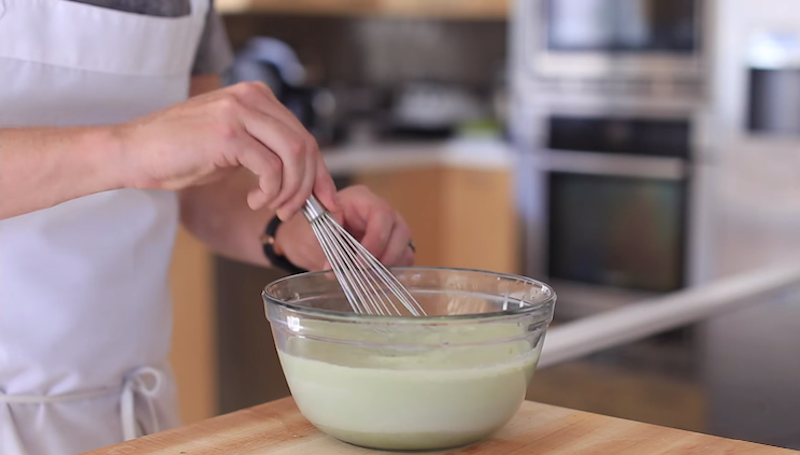
…and a pinch of salt for taste. Mix well.
Screen Shot 2015-03-17 at 9.37.57 AM

Once the mixture has been blended…

Screen Shot 2015-03-17 at 9.38.50 AM

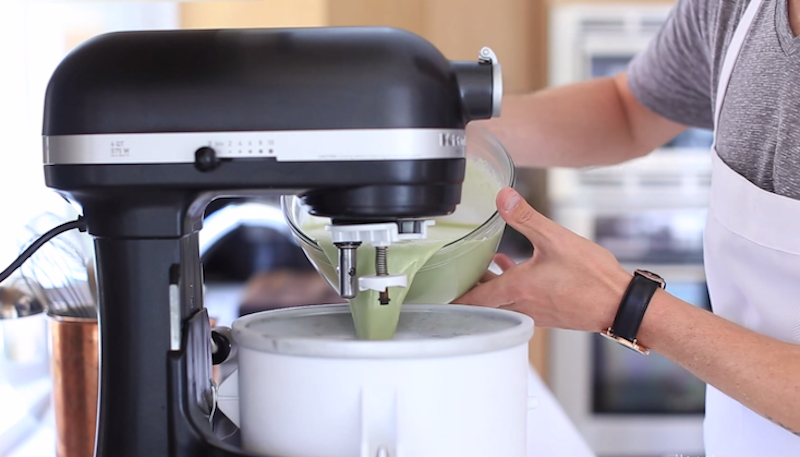
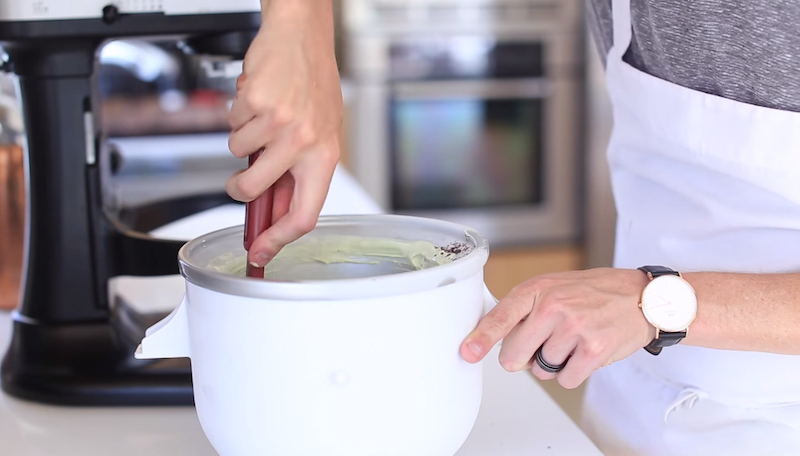
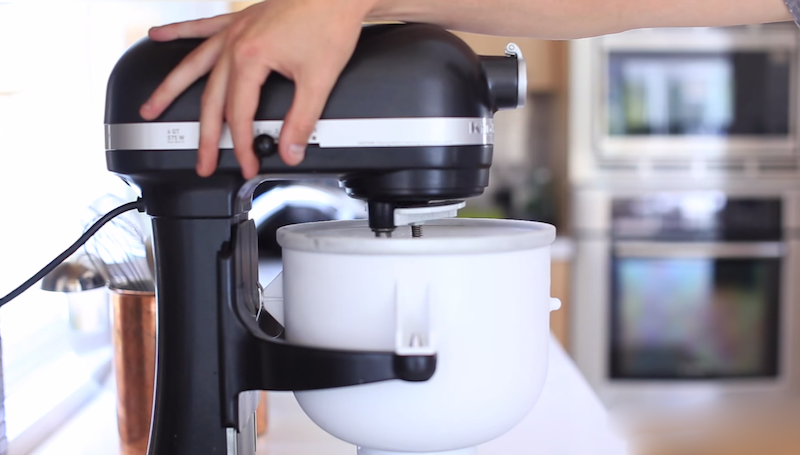
…transfer it to an ice cream maker or kitchen aid ice cream attachment.
Screen Shot 2015-03-17 at 9.39.45 AM

Turn mixer on low speed and let ice cream churn for about 30 mins.
Screen Shot 2015-03-17 at 9.43.48 AM

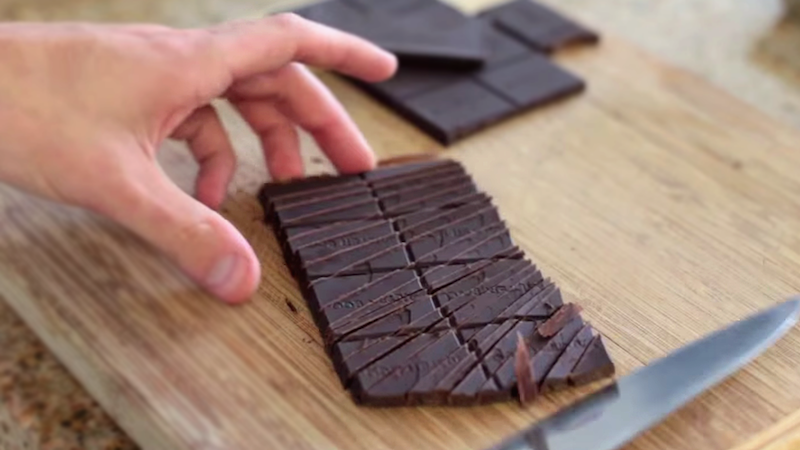
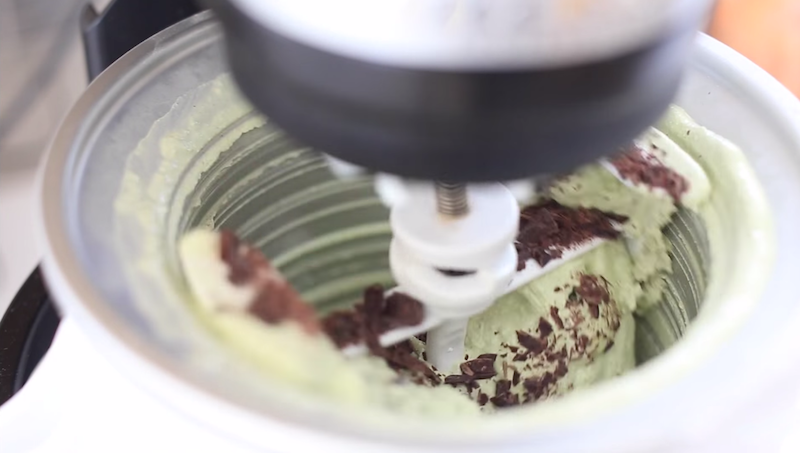
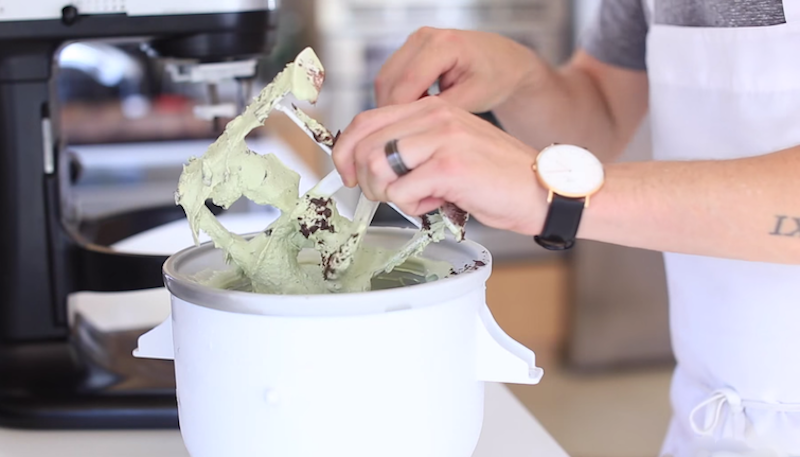
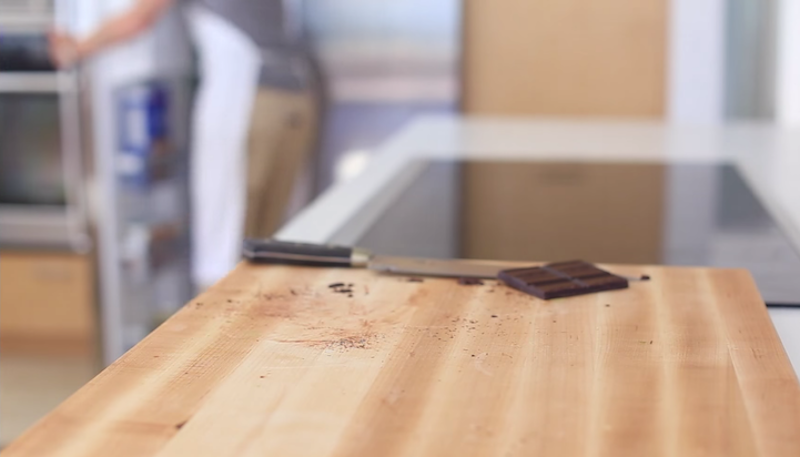
Once you have a thick, but creamy, texture add in about 1/2 cup of dark chocolate shavings.
Screen Shot 2015-03-17 at 9.44.24 AM

When it is thoroughly mixed, let the mixture set up in the freezer for about 2 hours.
Screen Shot 2015-03-17 at 9.49.46 AM
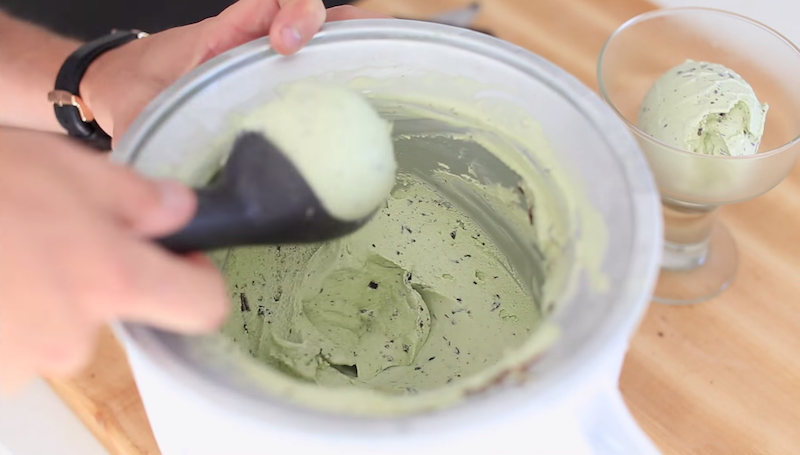
As soon as the ice cream has reached the consistency you prefer, remove from freezer…
Screen Shot 2015-03-17 at 9.50.13 AM

 …scoop…

Screen Shot 2015-03-17 at 9.51.20 AM

…and ENJOY!

[amd-zlrecipe-recipe:35]

Screen Shot 2015-03-17 at 1.21.49 PM

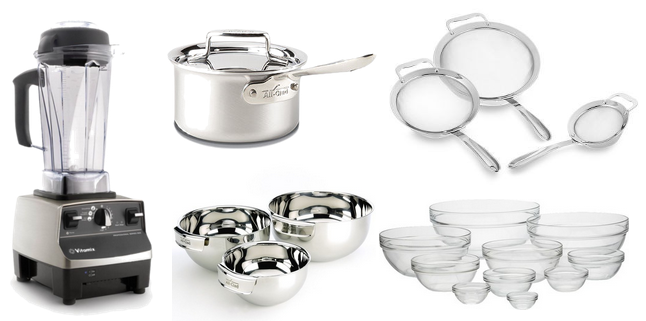
 | Left: Vitamix Blender |Top Middle: All-Clad Sauce Pan |Top Right: All-Clad Strainer |

 | Bottom Middle: Mixing Bow Set  | Bottom Right: Glass Bowl Set | 


Food for Thought

The DIFFERENCE BETWEEN WHISKY, BOURBON, SCOTCH, & IRISH

March 16, 2015

WHISKY
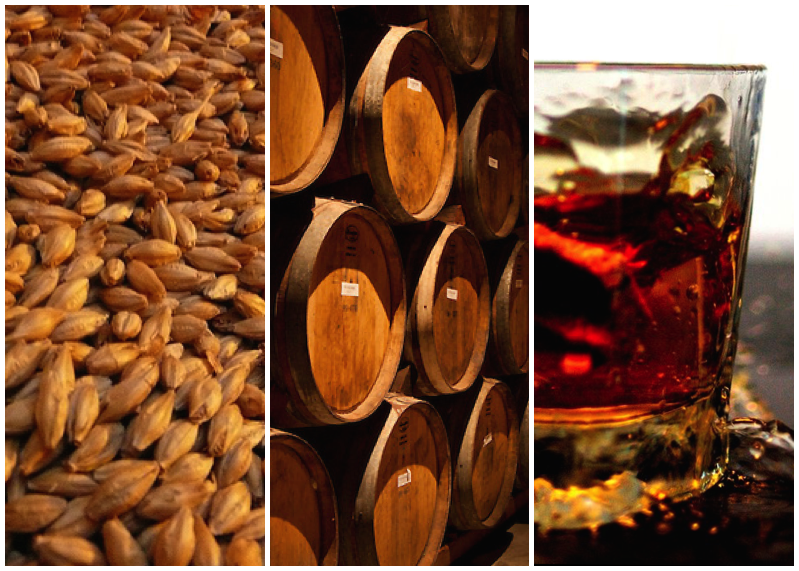
With St. Patrick’s Day ahead of us and Irish Whiskey Funnel Cake above us (↑), I’ve been thinking about the different types of liquors; more specifically the different types of whiskys. Did you know that scotch and bourbon are also derivative of whisky? Really the main difference between Whisky, Irish Whiskey, Scotch and Bourbon are sweet and simple.

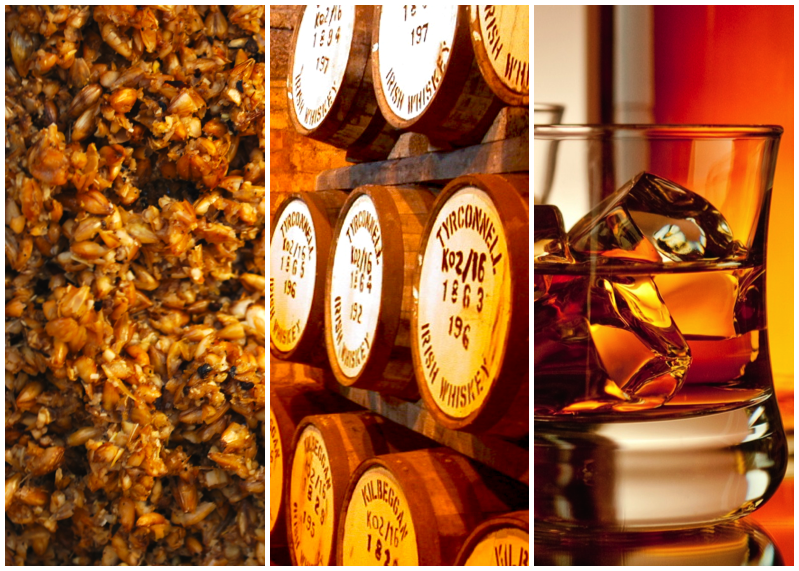
Whiskey can be defined as any alcoholic beverage that is distilled from fermented grain mash.

It ranges in variation according to how it has been distilled, aged, and where this process occurred. This determines the variation of whisky, i.e. is whisky, bourbon or scotch.

The most notable aspect of whisky is the taste.  Whisky is smokey, rich, and spicy, but it can also contain floral notes and sweet tones.  It all depends on the type and brand of whisky.


Irish Whiskey

IRISH WHISKEY
Irish whiskey (note whiskey with an “e”) is certainly the easiest to explain.  In short, Irish whiskey is any variation of whiskey produced in the Republic of Ireland or in Northern Ireland.

That’s a trait each of these whisky variants will possess.  It’s all about location.

In addition to decent, it’s made from yeast-fermented grain mash, distilled at least three times, aged for at least three years in wooden casks, and must be less than 190 PROOF, or 94.8% alcohol.

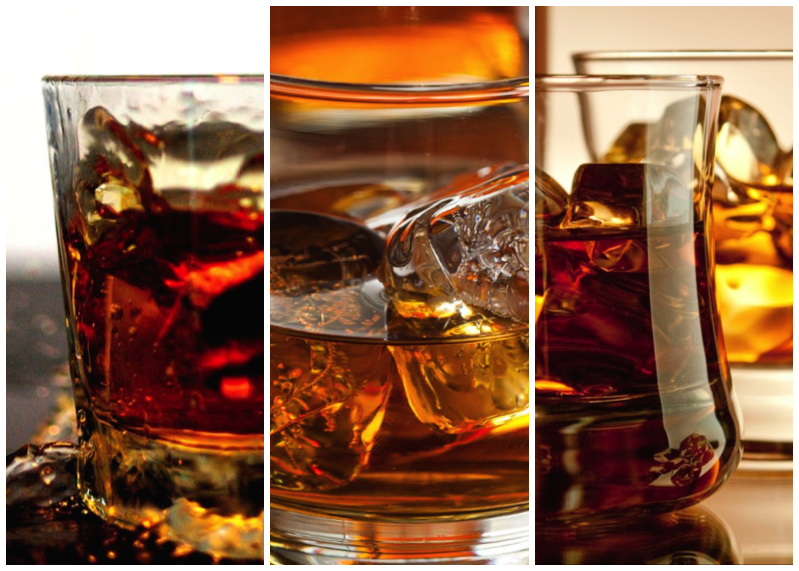
Irish whisky is very smooth, has a floral scent, and contains a nutty accent.  It’s perfect on the rocks, but can also be made into an Irish Mule. Simply delicious!


Scotch

 SCOTCH
Since Irish Whiskey is made in Ireland and it’s all about location, location, location, so it’s certainly no surprise that Scotch comes from Scotland.

It’s also made from malted barley, aged in oak casks for a minimum of three years, is less than 190 proof, and is distilled at least two times.  Surprisingly, it can be distilled up to twenty times and still be called scotch.

One of the biggest aspects of scotch is if it’s a single or blended scotch.  Single means it’s the product of a single malted barley distillery.  Single malt brands are the most expensive and the most complex.  They are often aged up to ten years.  The older, the better (and pricier). The strong presence of sweet notes, like honey and clove, make this the perfect liquor to drink straight up. It would definitely be a “faux pas” to mix anything with a single malt scotch. It’s brilliant as is!

Blended scotches (blend of malt barley and grain whiskies) are the most popular and the most affordable.  It’s often the base of many delicious cocktails.


Bourbon

BOURBON
Bourbon (whiskey) is certainly prepared/composed differently than its predecessors.

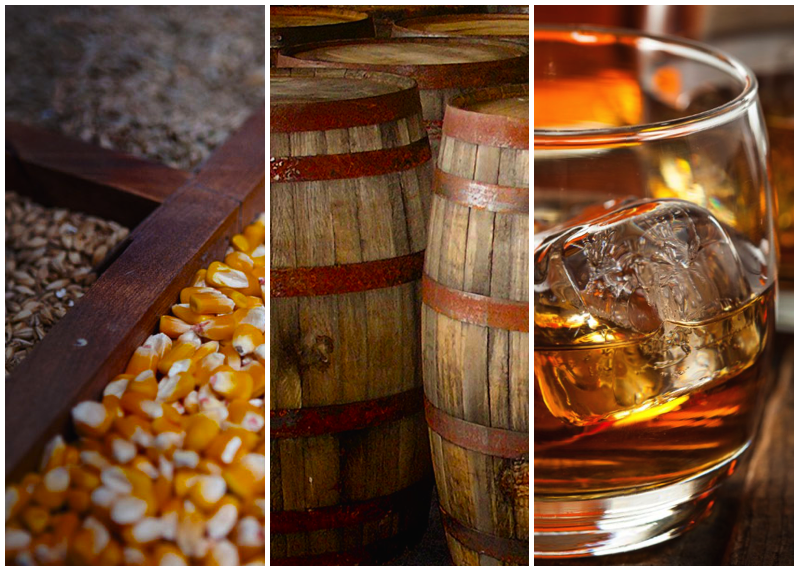
As opposed to being distilled from 100% grain, Bourbon is made from a grain mixture, which is at least 51% corn. This gives Bourbon it’s sweet flavor that you don’t get with whisky, Irish whiskey or scotch.

It’s also aged in new charred oak barrels (adding a caramelized flavor and darker hue), distilled to no more than 160 proof (80% alcohol) and does NOT need to be aged, but is most often aged at least two years so it can qualify as “straight bourbon.”

Like all of the whisky variations, Bourbon is native to one land, the United States. As a US native, when I think Bourbon I think of a classic old-fashioned.


Regardless of what variation you enjoy, nothing beats the smokey, rich, and spicy sip of Whiskey!

Food for Thought

A Natural Alternative to Food Coloring

March 10, 2015

In a recent collaboration with Catherine McCord of Weelicious, we joined forces to make a couple of “Au Natural,” dye-free desserts! She made a scrumptious Creamy Avocado and Lime Parfait and I made a classically delicious Mint Chip Ice Cream. Both recipes are absolutely DECADENT and nutritious!

The entire experience reminded me of how easy it is to use a natural food colorant, as opposed to the petroleum based food coloring that we generally use, which is non-sustainable and lacking nutrition.

Colors

In a world overcome with artificial additives and nutrient-bare substances, it’s ESSENTIAL to take on a natural alternative as often as possible! Using these simple tips and tricks, you can make any color on the spectrum, using all natural ingredients, that will NOT affect the taste of what it is you’re making. 

Let’s get started!


csa-3-beets1

Photo Credit: VegetableNutrition.in

  Red:

 It’s important to note that natural food coloring tends to yield lighter shades than petroleum based colorant. Regardless, it produces a wonderful array of appealing hues without altering flavors.

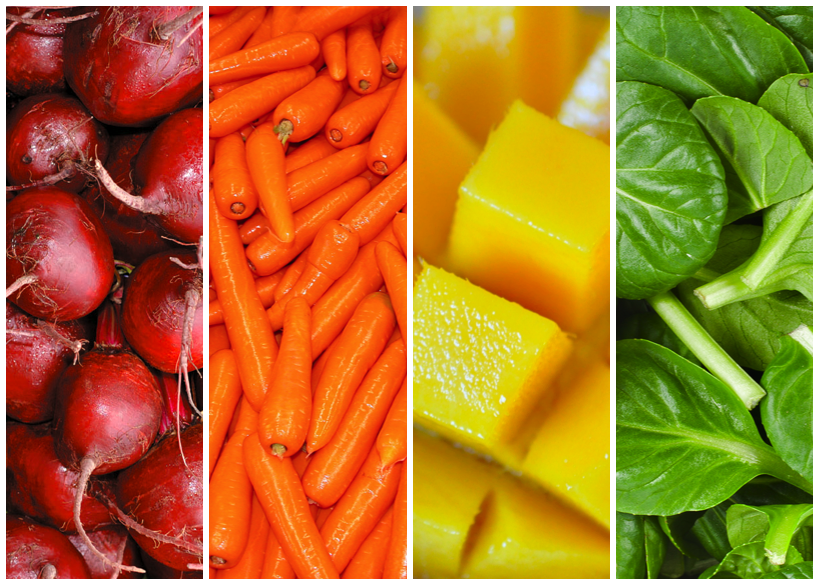
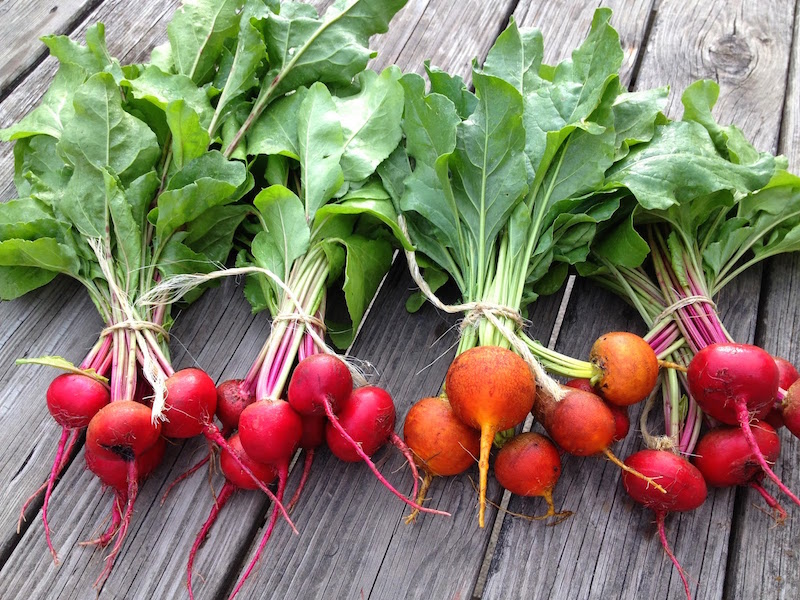
For RED, the easiest and strongest colorant is made by  juicing or boiling red beets. Using the juice or liquid, simply strain the liquid to remove any solids (using a fine strainer or cheese clothe), and you have an all-natural colorant that can be used in just about anything.

NOTE: If your dish is more sensitive to the addition of any liquid or you want a more vivid hue, you can make any of these colorants more concentrated by reducing the juice/liquid into a syrup. To do this, simply pour the juice/liquid into a sauce pan on medium heat and reduce until the colorant has a syrup-like viscosity.


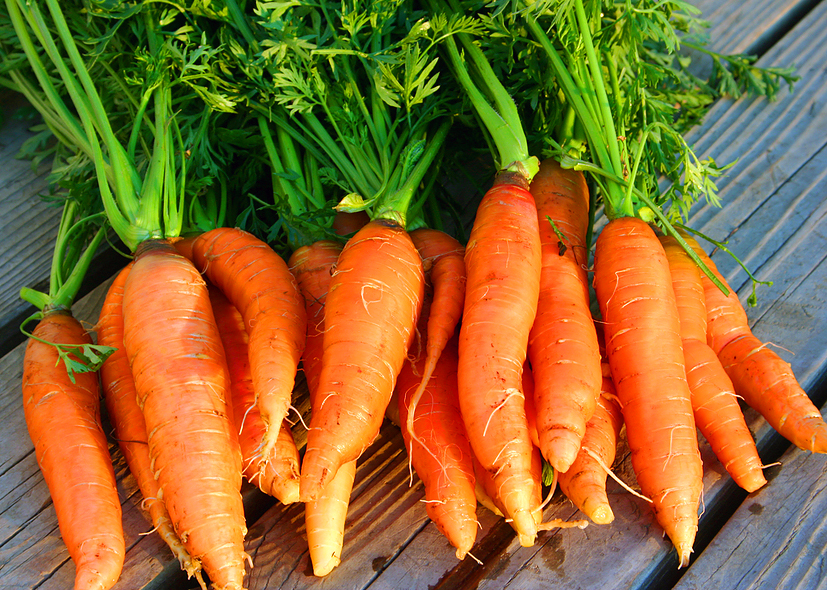
Carrots-Nantes1

Photo Credit: Harvesttotable.com

 Orange:

 Obtaining an ORANGE hue is just as simple.  Juicing carrots will provide you with a natural dye alternative that will emit NO additional flavor when used moderately.

Like I said, for a more saturated color, reduce the liquid into a syrup.  This will produce a more vivid color, without changing the properties of the dish.

For a lighter shade of orange, or any color, you can use the un-reduced liquid/juice. A little goes a long way.


Mango-Dices1web

Photo Credit: ourfamilysurvivalcenter.com

 Yellow:

 YELLOW can be made using an assortment of methods. I like to stick to as few methods as possible to keep things simple. Using the juicing method, as done above with red and orange, juicing and straining mangos produces a yellow colorant that can be added to any dish without the risk of adding additional flavor.

Another common method is to use heavily colored spices, like turmeric or saffron, as a food colorant.  A little will go a ways, so add in a sprinkle at a time to achieve the desired color, without adding enough to change the flavor components of the dish.  This method can use some experimenting, but will get the job done!


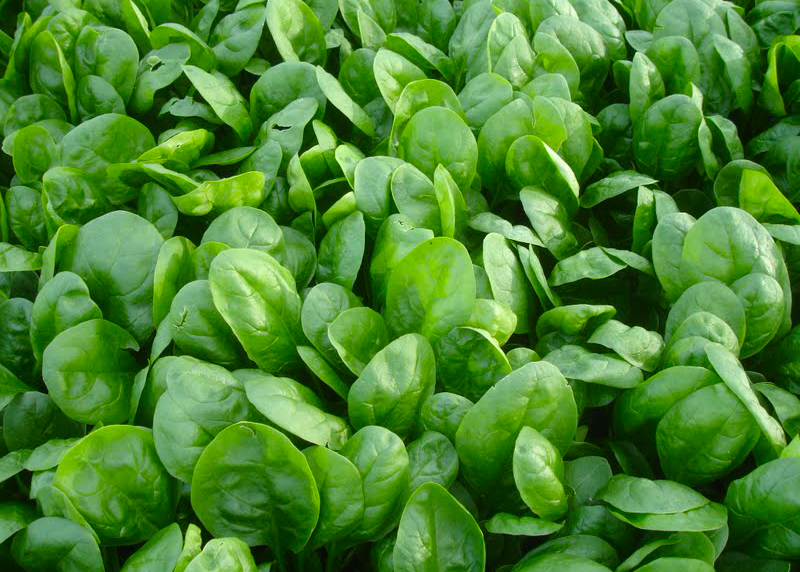
Spinach-Corvair-permission-HM

Photo Credit: pantrygardenherbs.com

 Green:

 GREEN can also be obtained using an assortment of methods, but the most common is to use juiced spinach.

Spinach already has a VERY mild flavor, so when used as a food colorant you are essential ensuring that the taste of your colored dish will be unaffected.

Liquid chlorophyll is another natural alternative to green food coloring and is quite effective, PLUS nutritious.  Down side would be the price. Liquid chlorophyll is a health supplement and tends to be a bit pricier, but is highly effective.


Sep 24 2009 003

Photo Credit: modernvictorygarden.com

  Purple and Blue:

 Of all the colors, BLUE is the hardest to achieve (even in a lab), but is definitely obtainable using a two step process. Lucky for us, this two step process kills two birds with one stone by yielding a purple dye AND a blue dye.

By boiling chopped red cabbage for about 20 minutes, or until the liquid has turned dark purple, you have a perfect PURPLE food colorant.

Taking this a step further, blue food coloring is made by adding baking soda, a pinch at a time, to the purple colorant. The purple colorant will react with the baking soda and yield a brilliant sapphire blue. 


 Remember, all-natural food colorants will produce lighter hues.  The coloring process can be magnified by reducing the colored liquid to a concentrated syrup, but at the end of the day you will need to experiment. 

By experimenting with the methods above, you can achieve just about any color.

Be sure to check out Catherine’s blog, Weelicious, for even more tips and tricks! You can catch both of our recipes on Youtube: 

Creamy Avocado and Lime Parfait 

Mint Chip Ice Cream

ENJOY!

Food for Thought

Subscriber GIVEAWAY!!!

March 6, 2015

 In honor of all of you joining me in the launch of my new Website, I’ve decided to host an INCREDIBLE giveaway for my subscribers! I want to give you the chance to win something that will not only show my gratitude for having you as a follower, but that could be a serious investment piece in your kitchen.

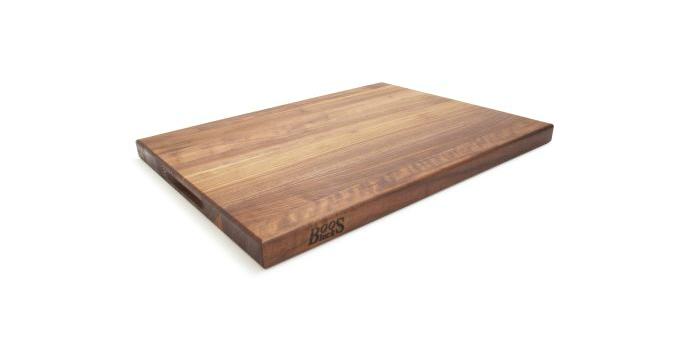
 If there’s one kitchen tool I use more than any other, it’s my John Boo’s and Co. Cutting Board, and that’s what I will be giving away. An identical board to the one I use at home!

If your not familiar with John Boo’s and Co., you should be! They are: “The number-one supplier of butcher blocks and cutting boards to restaurants, butchers, even the White House. Based in Effingham, Illinois, since 1887, John Boos & Co. provides premium products to home cooks and celebrity chefs.”

Screen-Shot-2014-10-17-at-8.46.42-AM

 John Boos is certainly one of the best cutting board brands on the market. 

Solid Walnut and reversible, this 24″ x 18″ cutting board is MASSIVE and provides plenty of space for prep and execution.

Screen-Shot-2015-02-09-at-9.33.24-AM

I use mine as a prep station all the time!

Screen-Shot-2014-12-30-at-11.50.26-AM

The cutting board is unseasoned, which means you’ll need to use a mineral oil, or John Boos Mystery Oil and Boos Block Cream with Beeswax, before you start slicing and dicing.

After that, it is extremely important to give your cutting board a good oiling on all surfaces every 3-4 weeks depending on your usage. When the cutting board becomes dry and lighter in color, you know that the time has come to re-oil your board.

Once treated properly, you are ready to get cutting!

Screen-Shot-2014-10-03-at-9.13.29-AM

Contact with my knife is always sturdy and carries through smooth to ensure a seamless and stable cut EVERY time. On top of that, this is one durable board that can take a beating with little to no sign of wear.

Screen Shot 2015-03-02 at 2.10.11 PM

 What I am giving away is one truly prestigious piece of equipment, a $200 value, a gorgeous tool to have in any kitchen, and a sincere token of my appreciation.  A truly reliable, durable, and stunning product that will last generations to come.

Screen Shot 2015-03-03 at 1.24.01 PM

 All you have to do to enter is SUBSCRIBE to my weekly newsletter AND re-tweet my latest video on twitter, tagging me @ByronTalbott. 

A winner will be randomly chosen on March 21st.

GOOD LUCK subscribers and thank you!!!

Desserts

The Chocolate Ball

March 5, 2015

I decided to kick off #ChocolateWeek with a stunning display/chocolaty goodness experience! If you do this for your friends and family it’s a GUARANTEED way to ensure some “Oohs and Awes!”

The main concept behind this dish is: Tempering. Tempering is the process of melting and cooling pure chocolate in a precise way to maintain the structure of the chocolate’s fat molecules.  This allows the chocolate to cool into a glossy solid, as opposed to remaining melted or overheating the chocolate, which separates the fat molecules from the other ingredients, like milk and sugar. 

Screen Shot 2015-03-04 at 12.33.57 PM

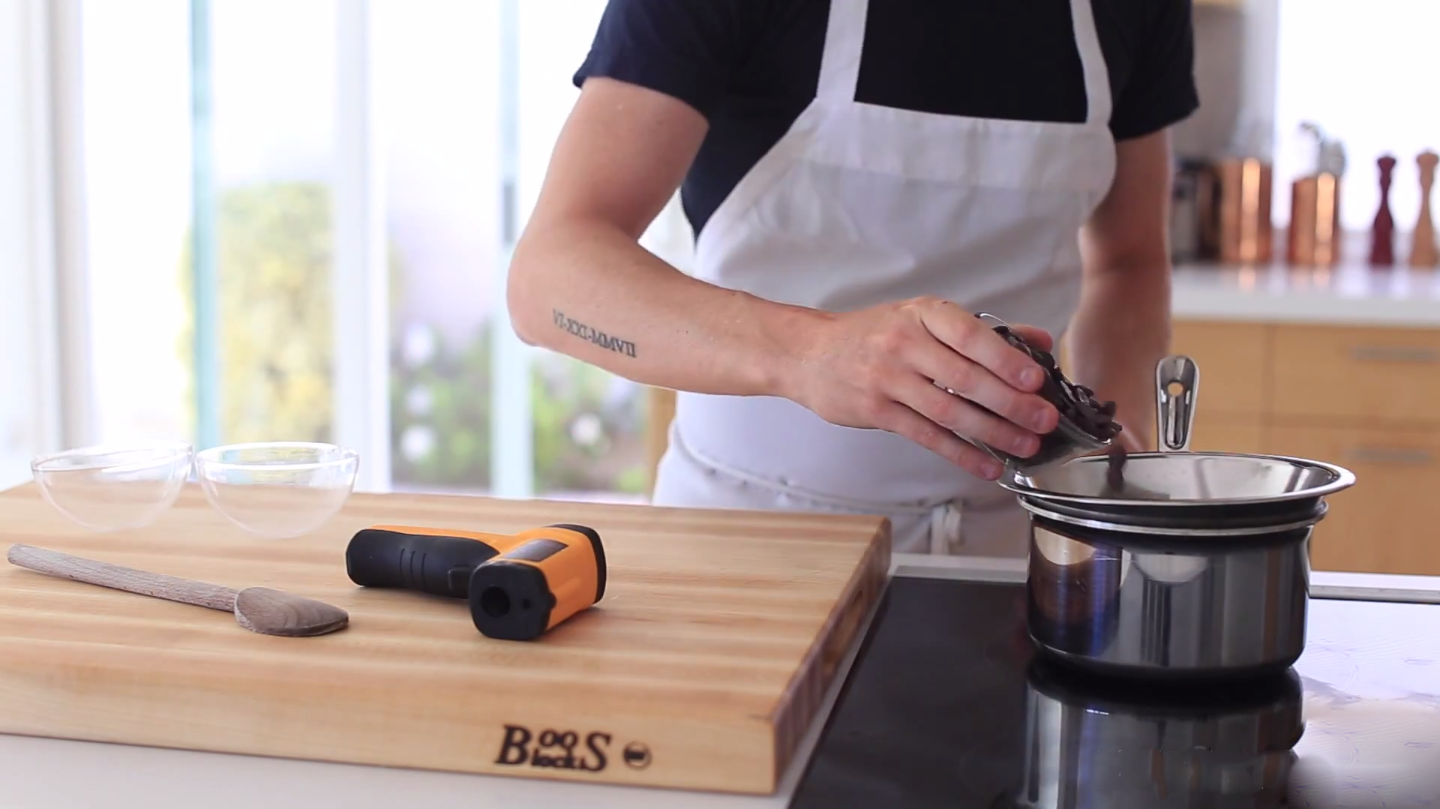
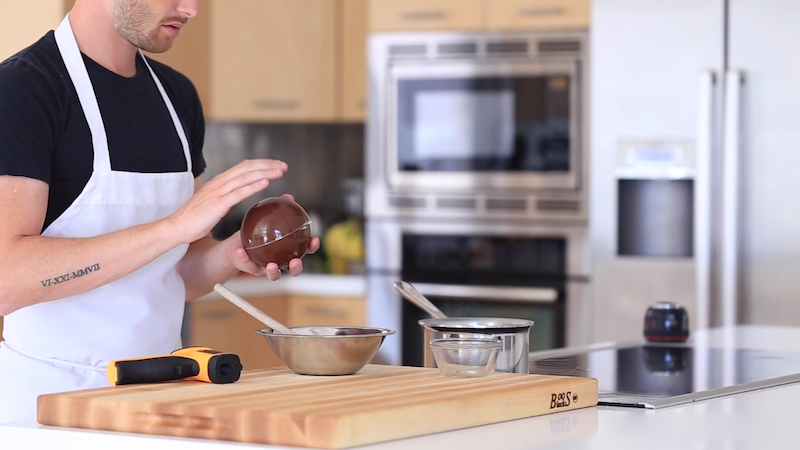
First up, you will start off by bringing 1 cup dark callebaut chocolate chips to 101°F, using the double broiling method.

Screen Shot 2015-03-04 at 12.34.32 PM

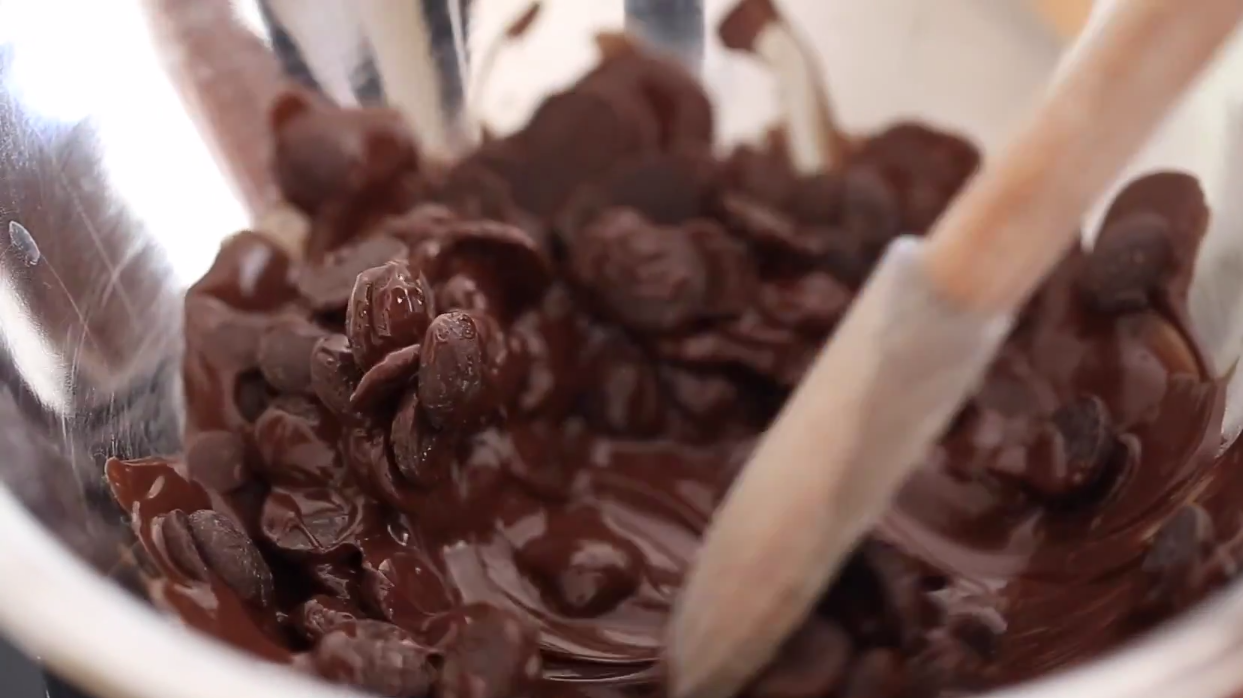
Gently mix the chocolate as it slowly melt to ensure all the solids liquify.

Screen Shot 2015-03-04 at 12.34.47 PM

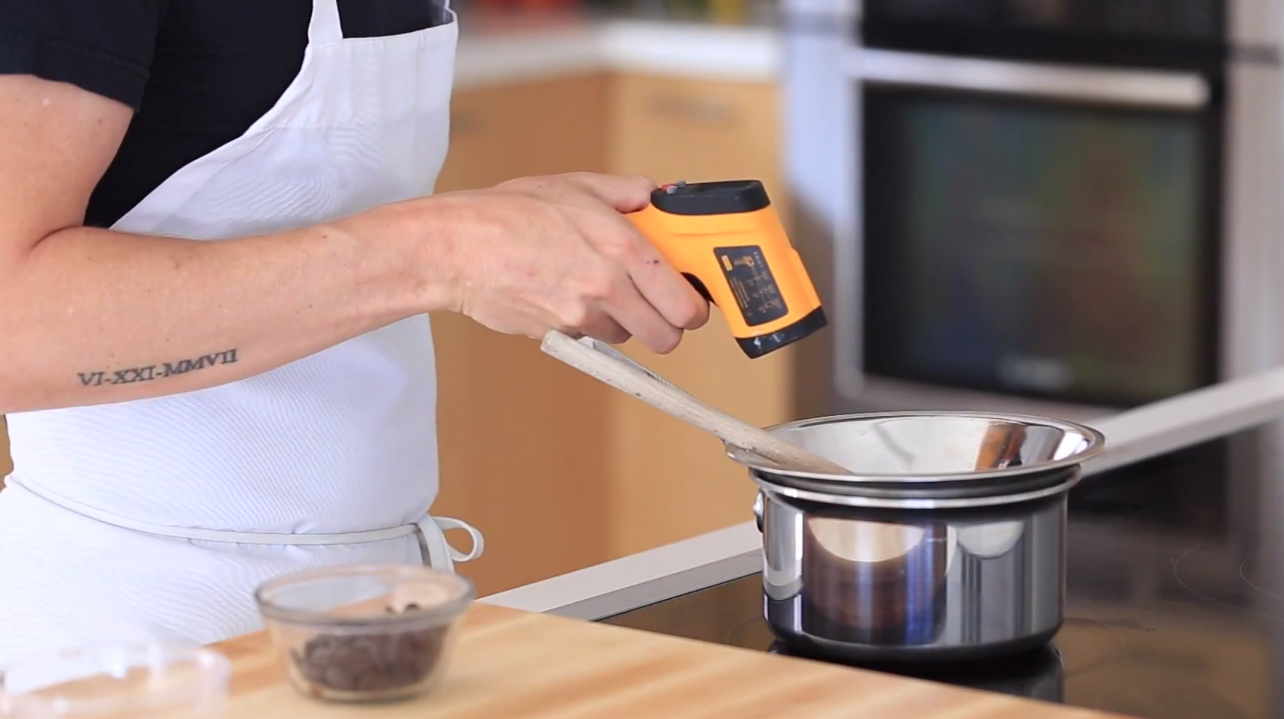
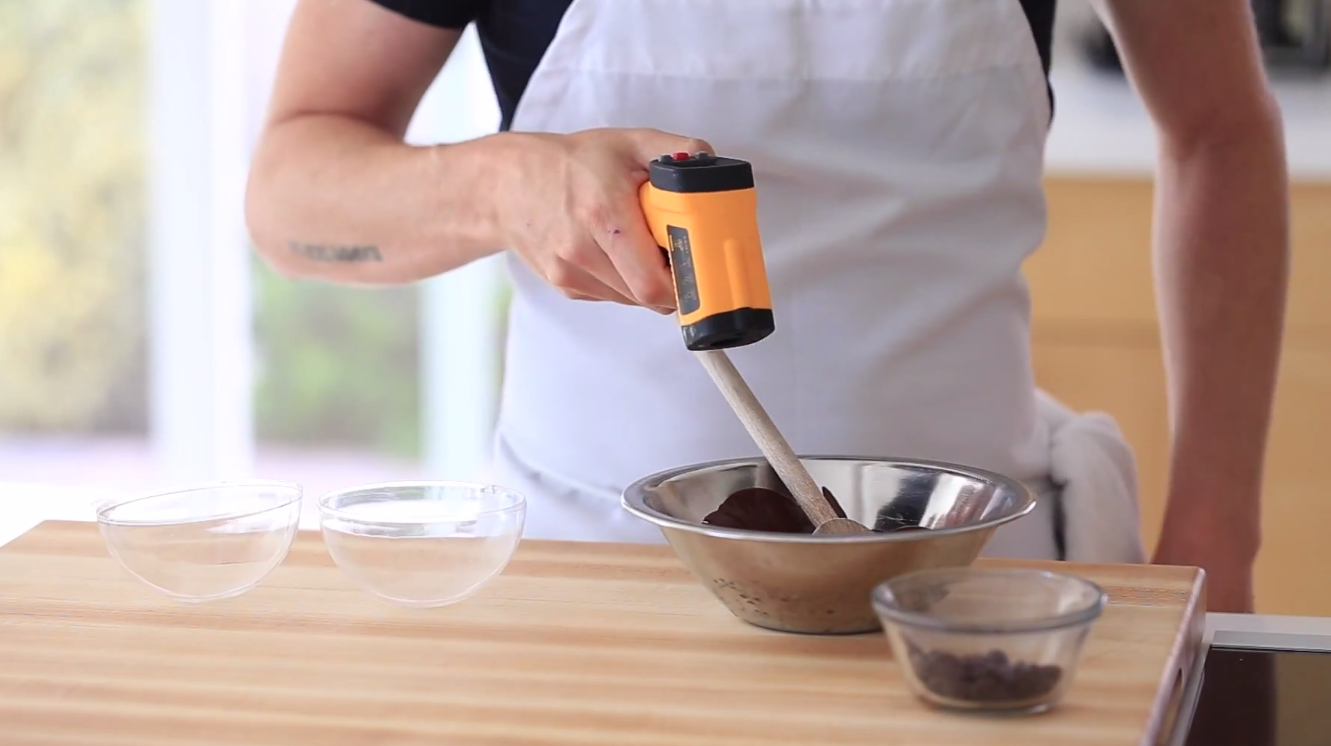
Temperature is extremely important and should be monitored. Remember what I said about the delicate nature of tempering and the risks you take if you over heat the chocolate.

Screen Shot 2015-03-04 at 12.35.34 PM

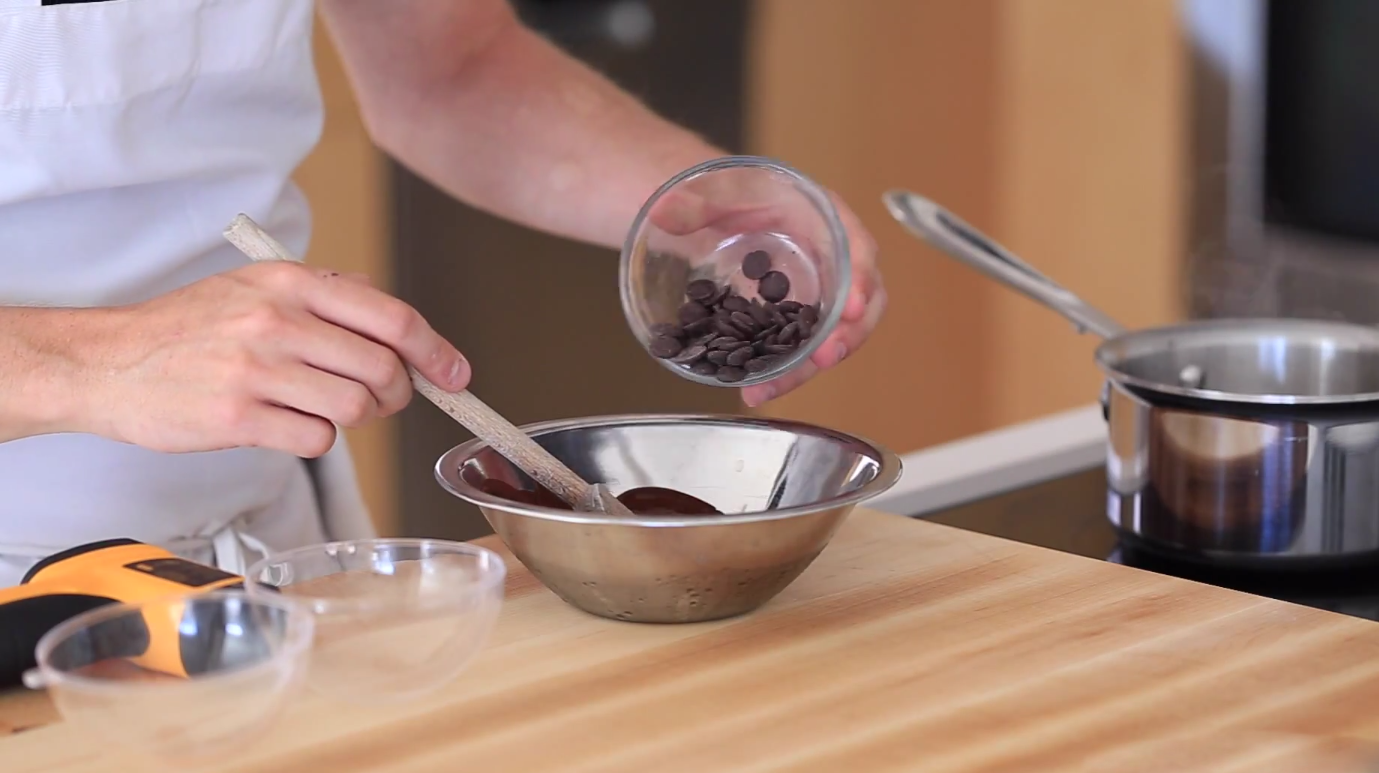
Once the chocolate is throughly melted and up to temperature, remove it from the stove and mix in a few chocolate chips to cool the mixture.

Screen Shot 2015-03-04 at 12.35.53 PM

Gently stir in the chocolate chips until the mixture is smooth and approximately 89-90°F.

Screen Shot 2015-03-04 at 12.37.36 PM

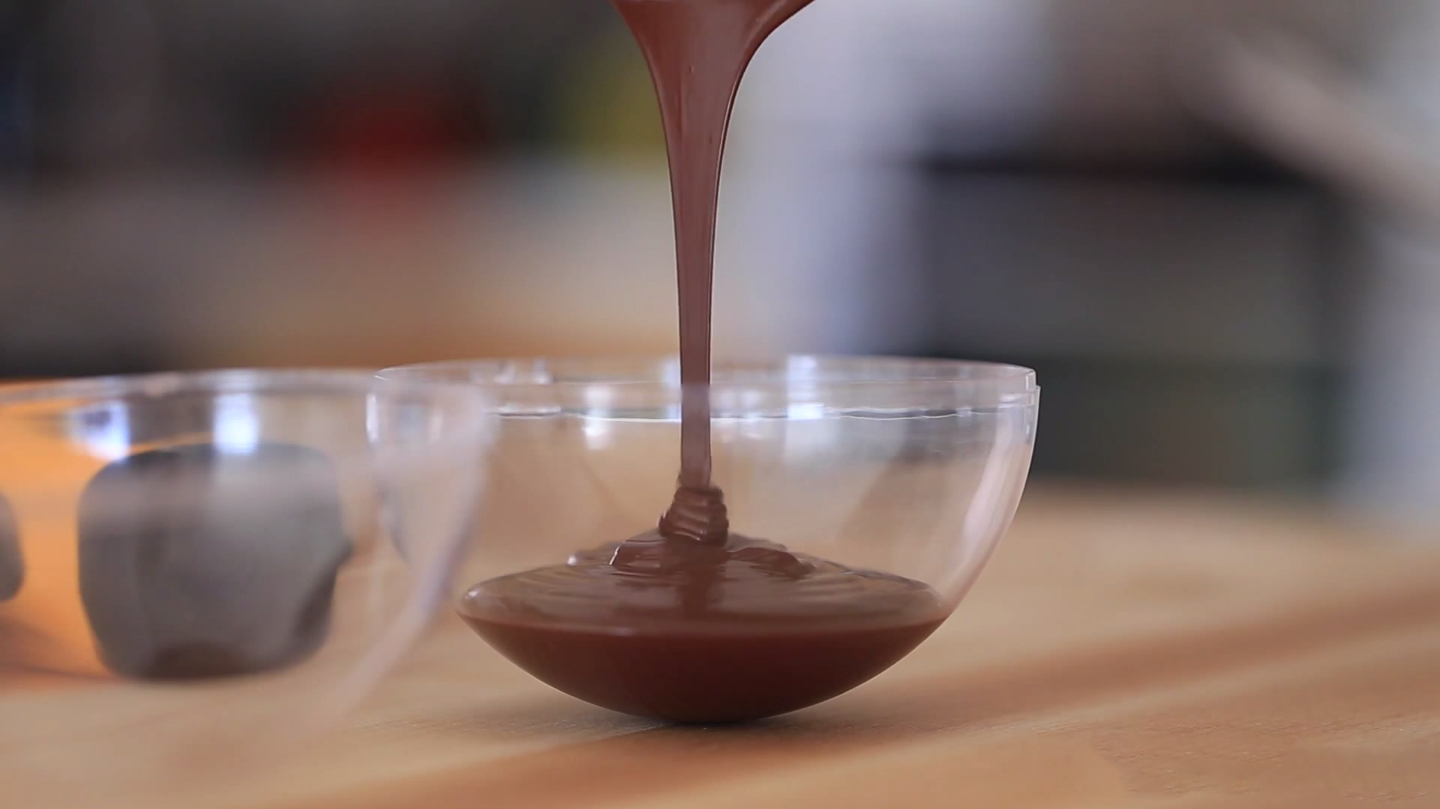
Once the chocolate is tempered to 89-90°F, pour the liquid into your chocolate mold.

Screen Shot 2015-03-04 at 12.38.09 PM

You’ll want to fill it about a quarter of the way up.

Screen Shot 2015-03-04 at 12.38.27 PM

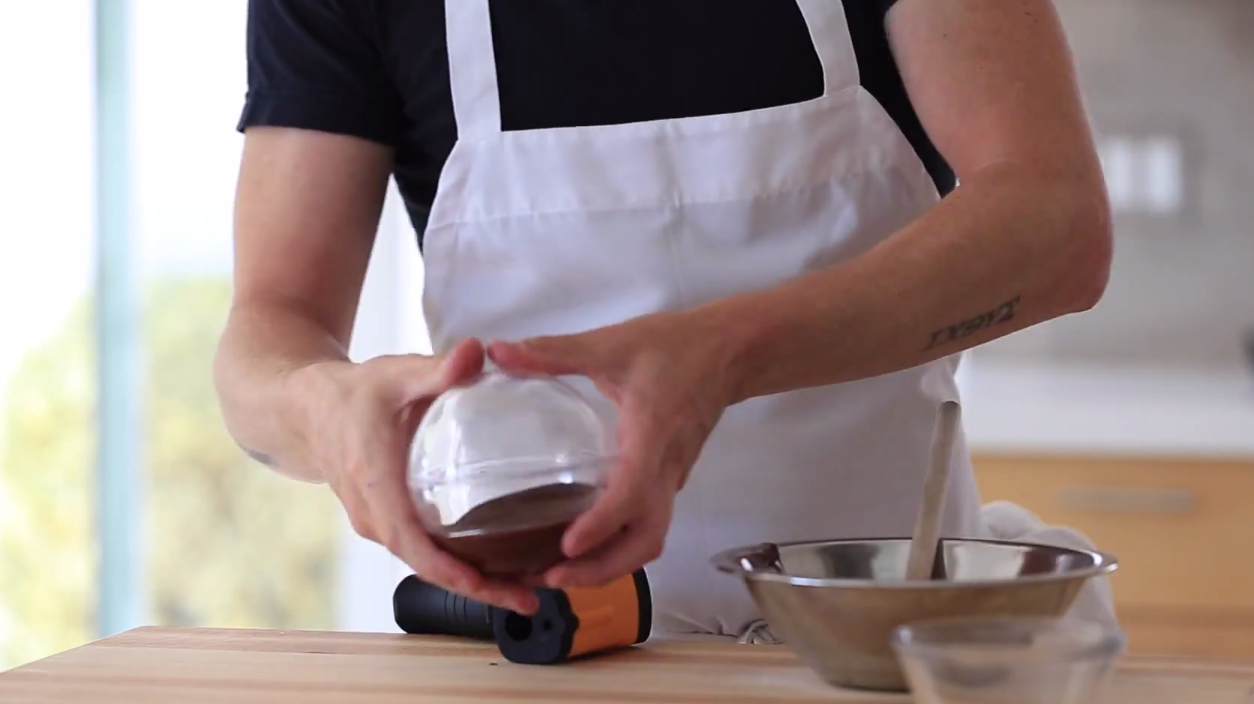
Be sure to coat all sections of your mold. 

Screen Shot 2015-03-04 at 12.39.15 PM

You will want a solid sphere with no gaps in chocolate coverage.

Screen Shot 2015-03-04 at 12.39.51 PM

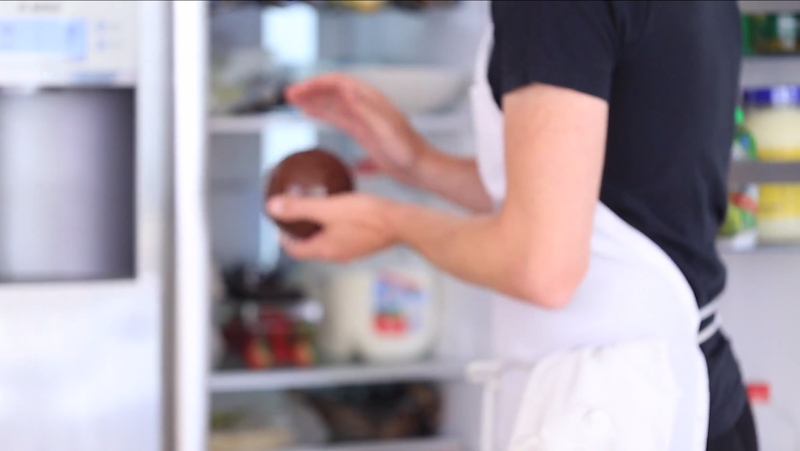
When the sphere is coated, allow it to cool in the fridge for 30 minutes.  Flip every 2-3 minutes to ensure is cools evenly.

Screen Shot 2015-03-04 at 12.40.18 PM

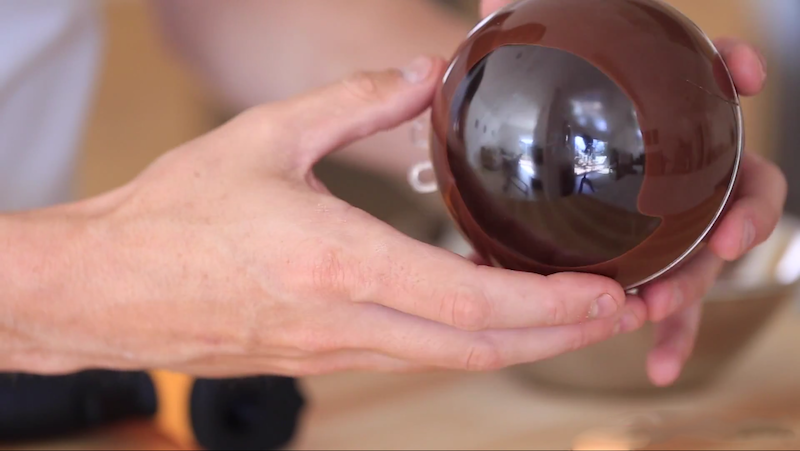
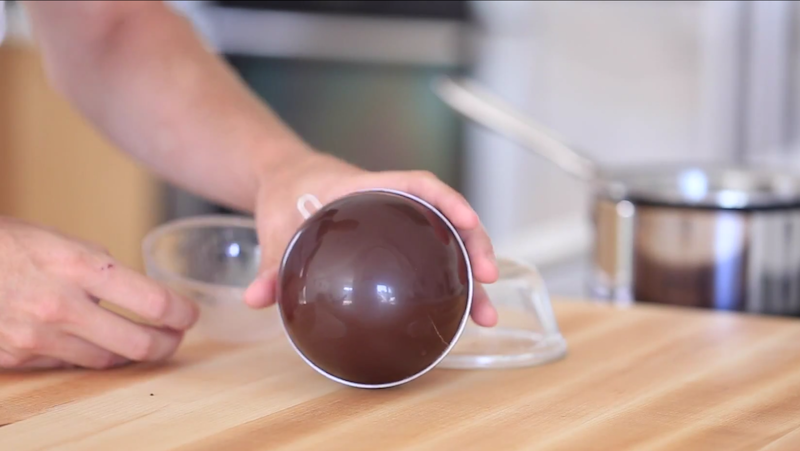
Once cooled, remove from the mold.

Screen Shot 2015-03-04 at 12.40.44 PM

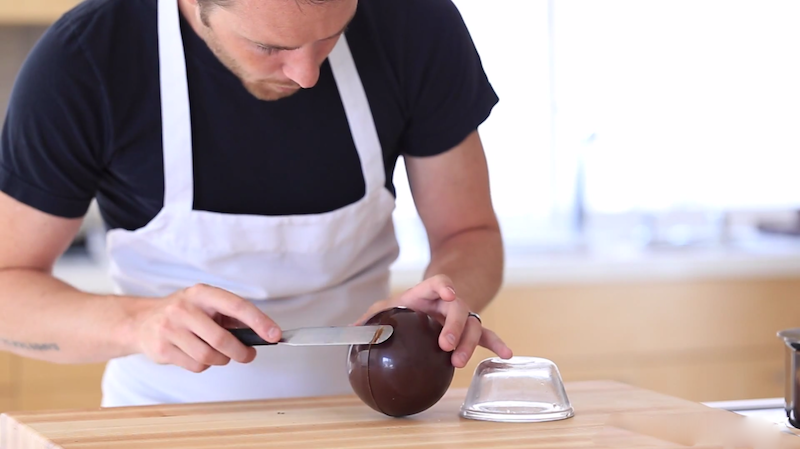
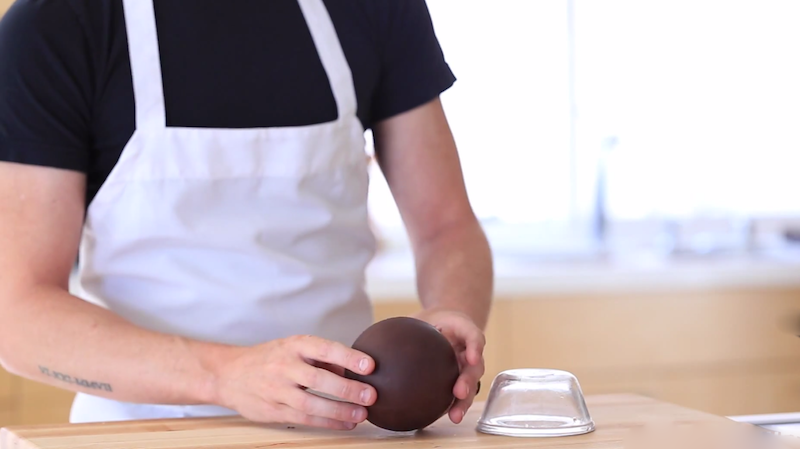
I like to smooth out the middle seam with a warm spatula, but this is optional.

Screen Shot 2015-03-04 at 12.41.03 PM

If you prefer a shiny sphere, you can skip the step above.

Screen Shot 2015-03-04 at 12.41.31 PM

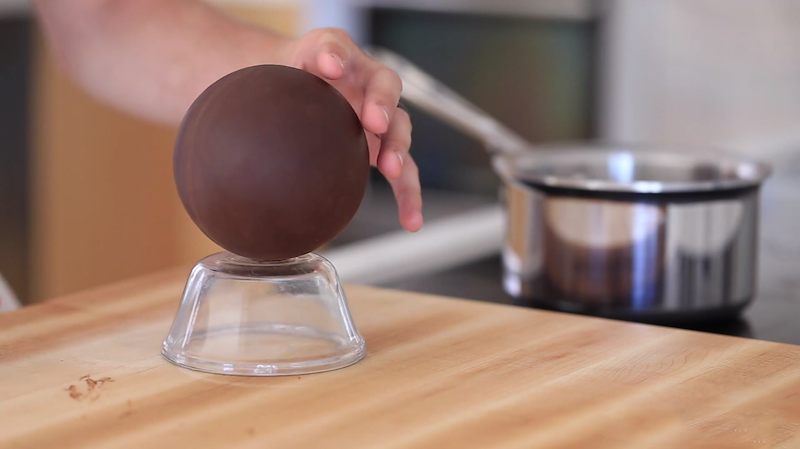
Next you will want to heat up a plate or pyrex container…

Screen Shot 2015-03-04 at 12.41.52 PM

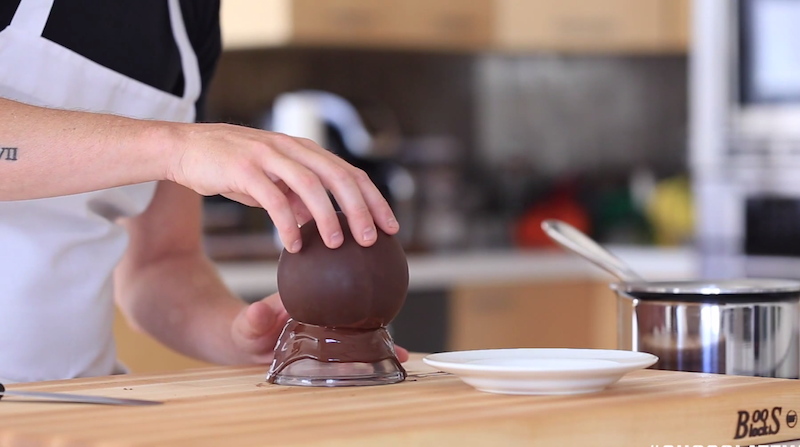
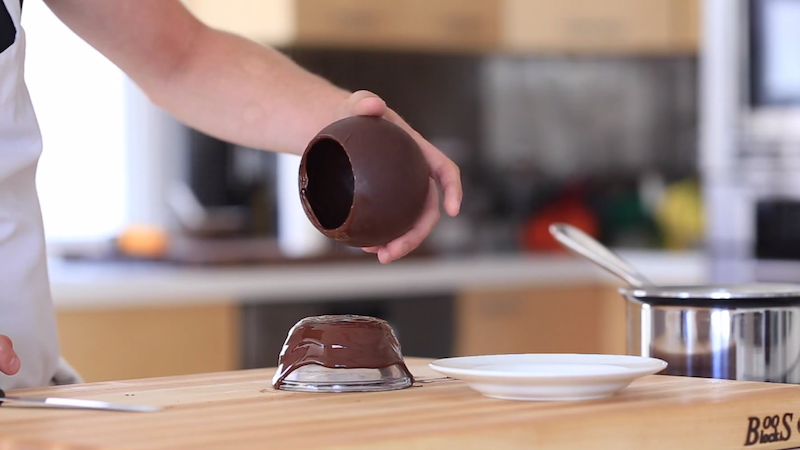
…and gently press the sphere onto the dish, in order to melt the bottom of the chocolate globe.

Screen Shot 2015-03-04 at 12.42.18 PM

This should leave you with a perfect cavity to fill the sphere with whatever you desire.

Screen Shot 2015-03-04 at 12.42.50 PM

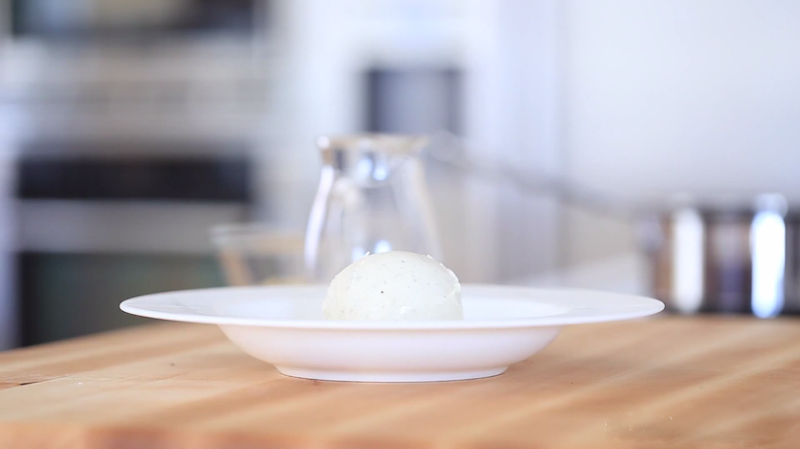
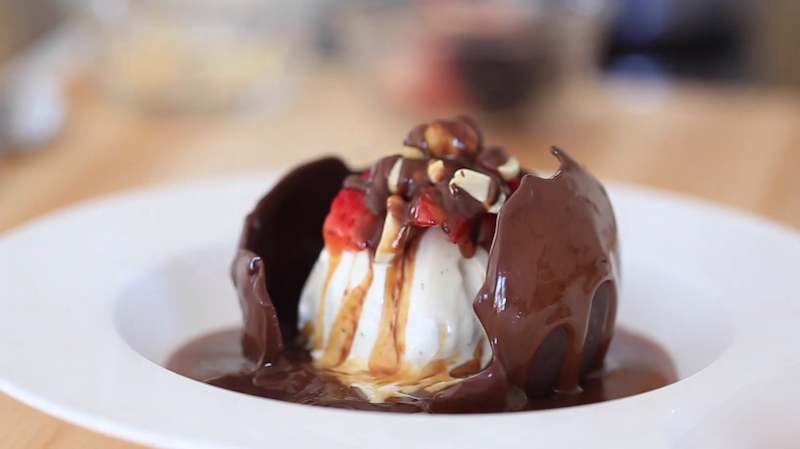
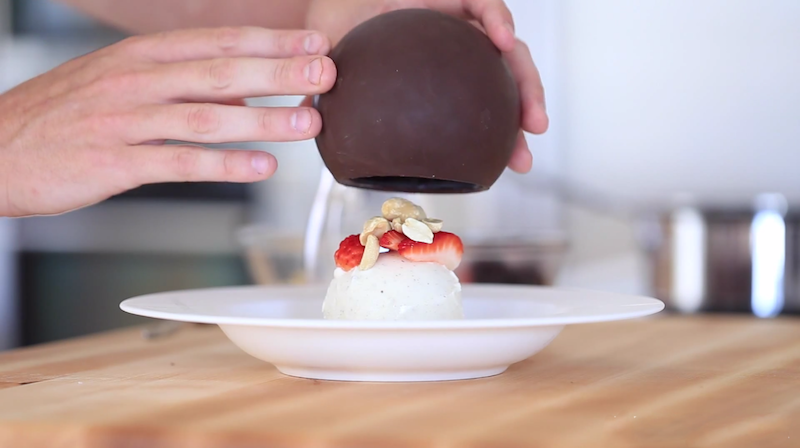
I chose to do a simple scoop of Vanilla Bean Ice Cream…

Screen Shot 2015-03-04 at 12.43.13 PM

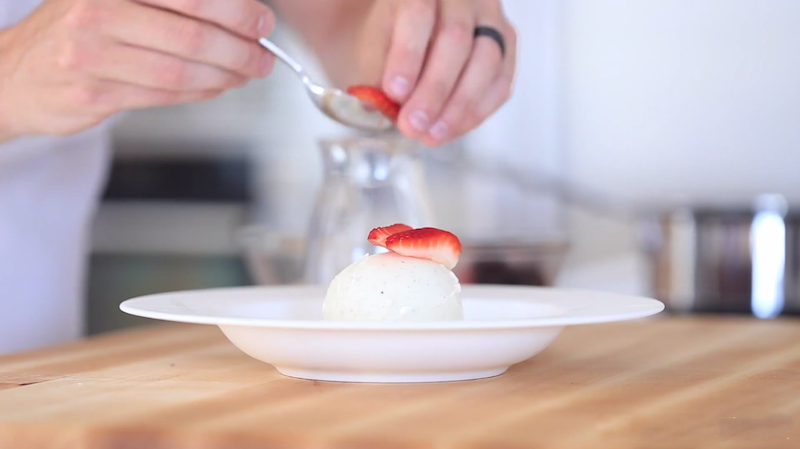
…topped with strawberries…

Screen Shot 2015-03-04 at 12.43.28 PM

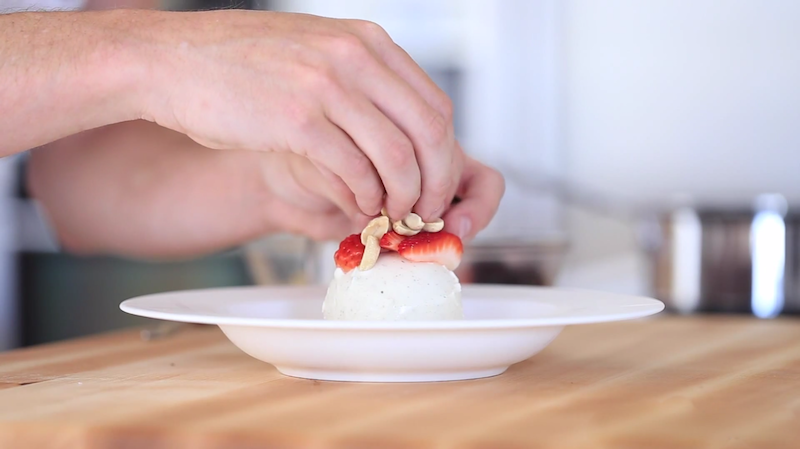
…and nutts.

Screen Shot 2015-03-04 at 12.43.41 PM

I placed the chocolate sphere on top…

Screen Shot 2015-03-04 at 12.45.02 PM

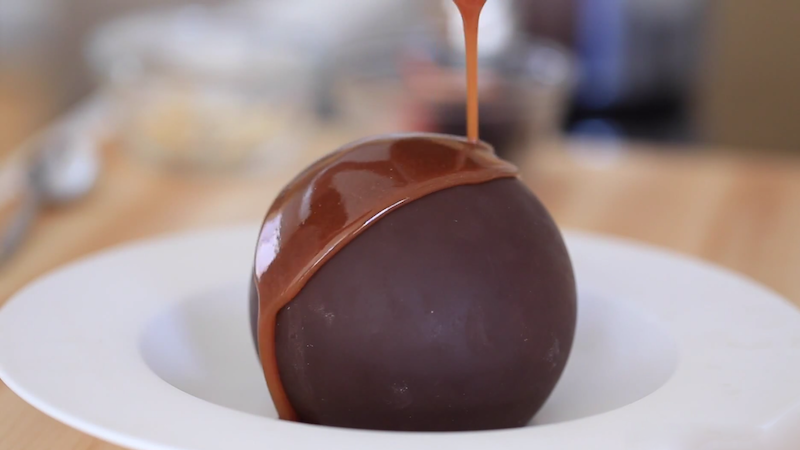
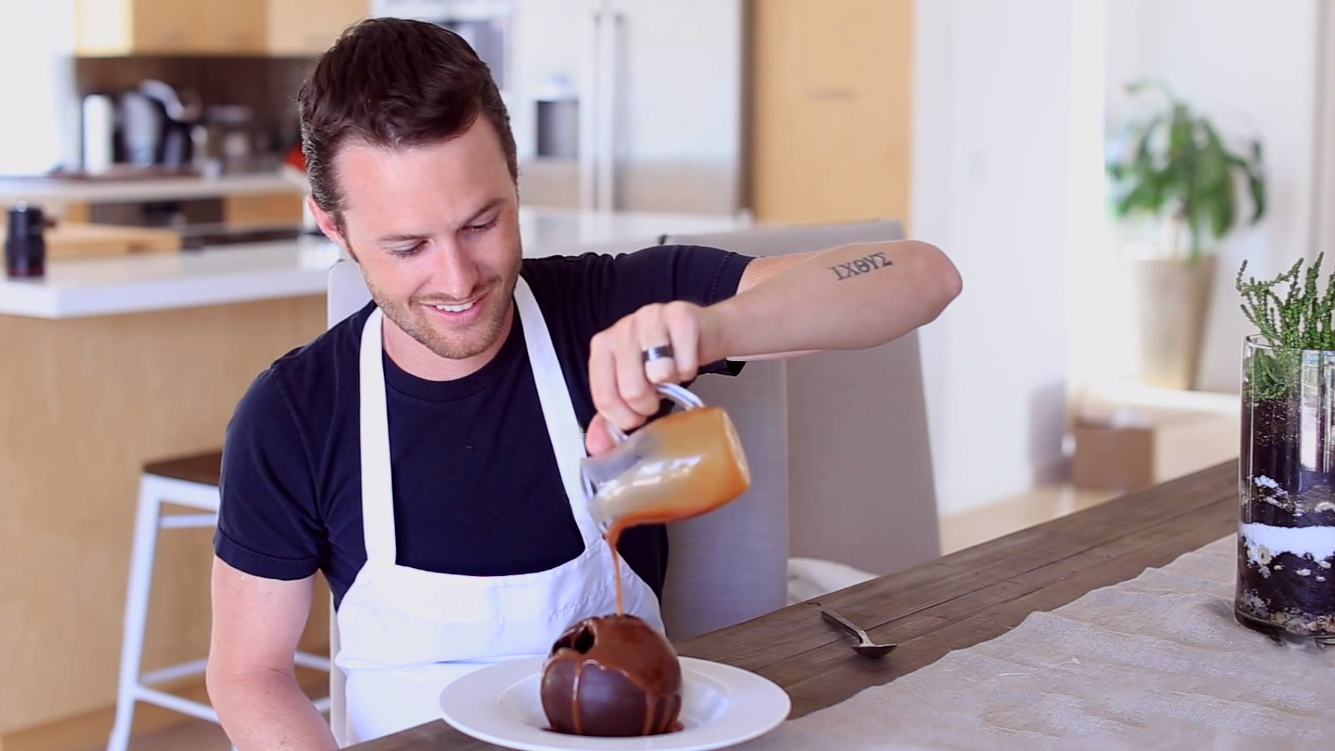
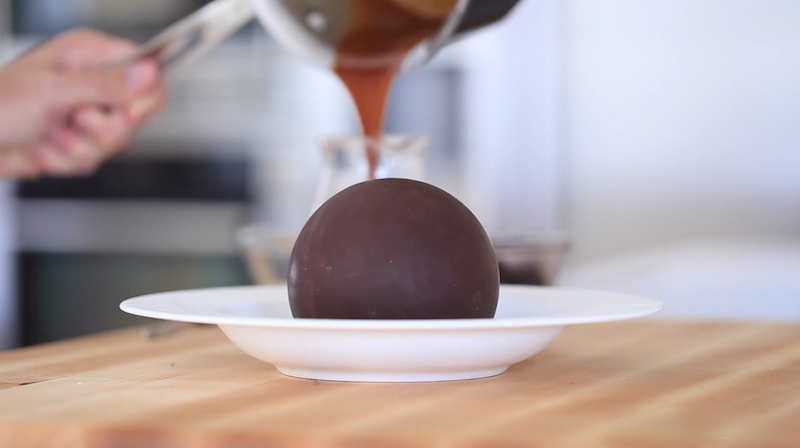
Next I heated the topping, in this case caramel…

Screen Shot 2015-03-04 at 12.45.18 PM

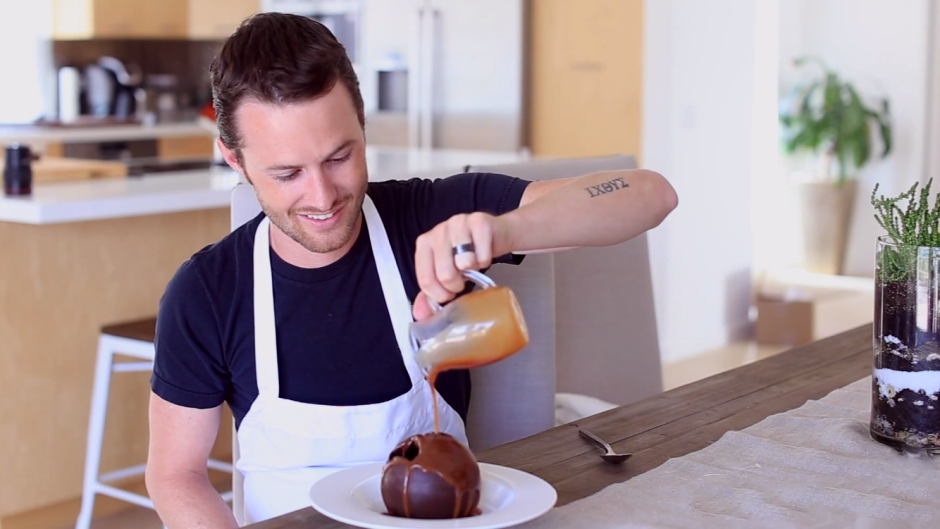
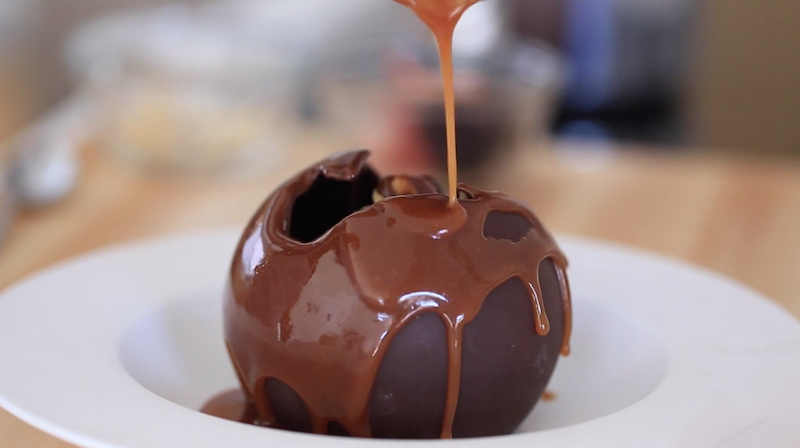
…and poured the hot liquid over the dish.

Screen Shot 2015-03-04 at 4.46.45 PM

This always makes me feel like a kid opening a DELICIOUS present!

Screen Shot 2015-03-04 at 12.45.38 PM

The chocolate sphere will start to melt around the continents of the dish…

Screen Shot 2015-03-04 at 12.46.17 PM

…and what you are left with is a delicious and memorable treat that is sure to be a crowd pleaser, and ready for you to enjoy!

[amd-zlrecipe-recipe:34]

Untitled-1

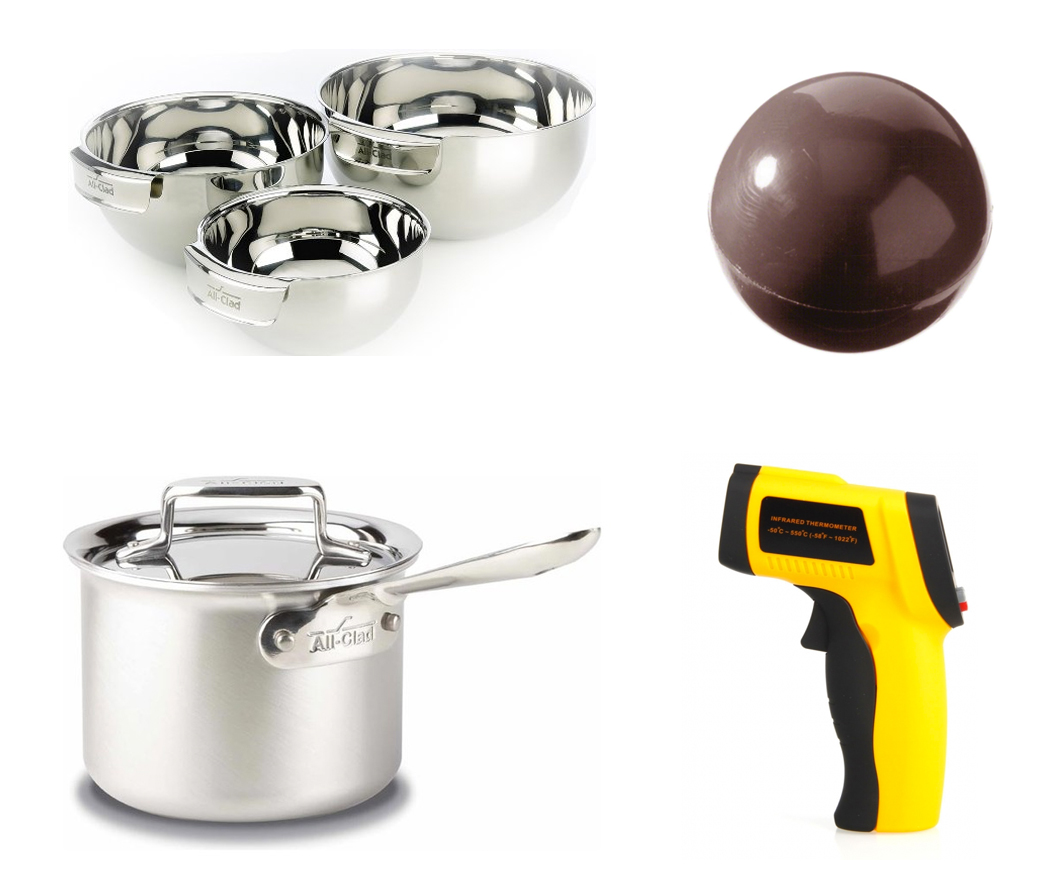
 |Top Left: Mixing Bow Set | Top Right: Chocolate Mold |
 | Bottom Left: All-Clad Sauce Pan | Bottom Right: Digital Laser Thermometer | 
 

Food for Thought

The Chocolate Spectrum

March 4, 2015

 Any sweet-toothed individual can attest to chocolate’s ability to raise spirits, and many healthy experts will confirm chocolate in moderation is actually healthy for you.  It helps release serotonin, which supports a healthy mood, digestive system, memory, ability to sleep well, and even stamina.

With an array of chocolates on the market (ie: white, milk, dark, darker, etc.), I pose the question:

Do all types of chocolate effect us in the same way, and why?

Photo Credit:  Koko Buzz

Photo Credit: Koko Buzz

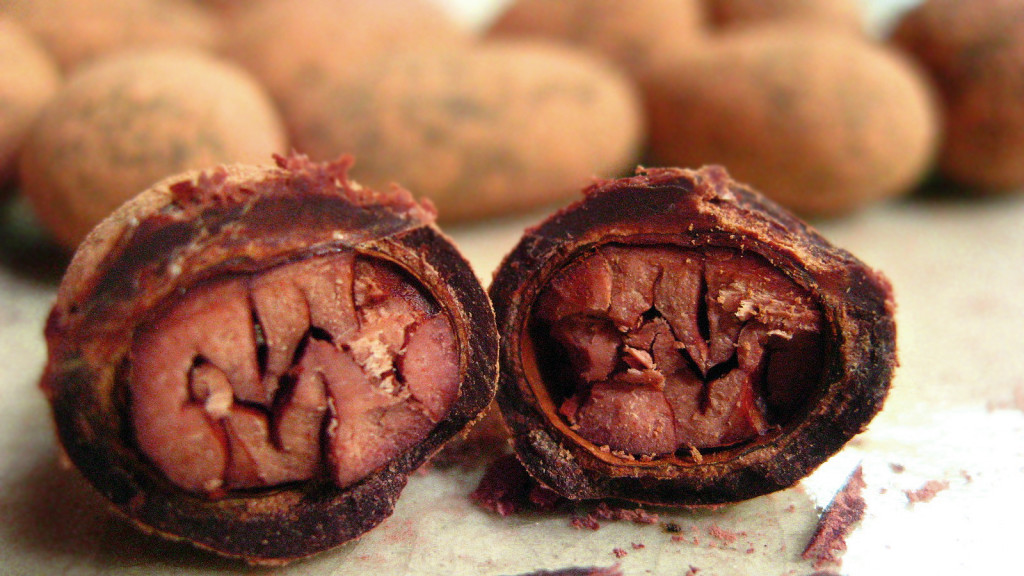
The first, and probably most important fact, is the composition of the chocolate is key. Chocolate is made from two extracted portions of the cocoa bean.  These are cocoa solids and cocoa butter. It’s these portions that contain the beneficial components of chocolate; however, chocolate as we know it only contains a portion of these ingredients.

chopped-white-chocolate

Photo Credit: SimplyScratch.com 

White Chocolate
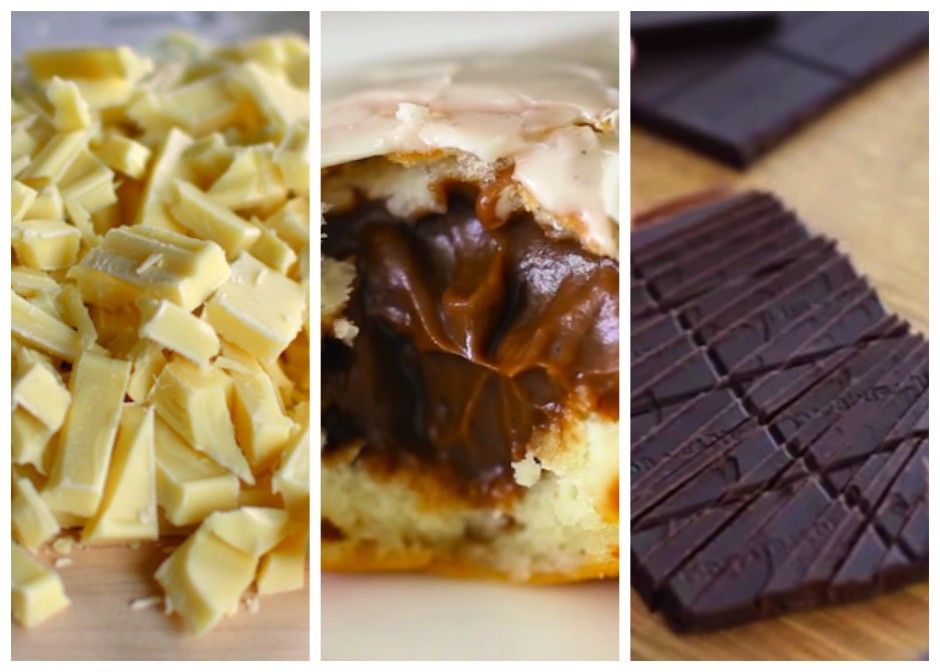
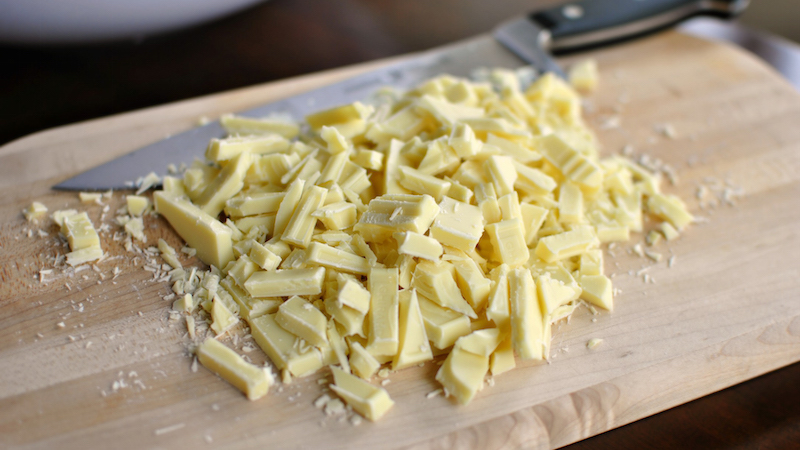
White Chocolate is produced using only a small amount of cocoa butter (for that chocolate essence), but is mostly comprised of milk and sugar.  It’s obvious that milk contains calcium, so in that regard, yes, you are receiving some nutrition; however with the absence of more cocoa product, most will say white chocolate isn’t really chocolate at all… I’ll leave that debate for others, but what can be said is: White Chocolate is the least nutritious and beneficial on the chocolate spectrum. It also has the lowest melting point.

A general rule in melting chocolate: The lighter the chocolate the lower the melting point.  White and Milk chocolate melt at about 86-90°F. You should never heat above 110°F or you risk burning the chocolate.  Dark chocolate on the other hand, has a melting point of about 90-96°F, and can be heated to 115°F safely. Regardless the type of chocolate, the melting point is still below body temperature; hence, chocolate melts in your mouth.

Screen Shot 2015-03-02 at 5.01.42 PM

Milk Chocolate
Milk chocolate can be considered the middle man of the chocolate kingdom. It contains a small about of cocoa butter and cocoa solids, but still, is mostly made using milk and sugar. This is a fact that makes milk chocolate what it is, rich, creamy, and sweet, but also makes milk chocolate very calorie dense and less nutritious than a more pure chocolate source, dark chocolate.

Screen Shot 2015-03-02 at 5.12.14 PM

Dark Chocolate
Dark Chocolate is the most nutritious of the chocolates and that is because it contains the most cocoa product.  In order to be classified as Dark Chocolate it must contain a MINIMUM of 70% cocoa, as opposed the very minimal amount of cocoa product in lighter chocolate.

You may have asked yourself earlier why I mentioned “dark” and “darker” chocolate, and that’s because dark chocolate can contain as little as 70% cocoa, but as much as 100% cocoa (baking chocolate).  The higher the levels of cocoa the more pure and bitter the chocolate.  The lower the percentage, the sweeter chocolate will be.

Regardless of your sweetness preference, the higher the cocoa percentage the more chocolate may offer nutritious benefits like an elevated mood and healthy heart function. It may also increase levels of serotonin, anti-oxidants, and is even proposed to reduce cancer risks.

Just know, chocolate, like everything, is good in moderation.