Breakfast, Food for Thought

Is Breakfast The Most Important Meal of the Day?

November 27, 2015

Is breakfast the most important meal of the day? It’s a question we all ask ourselves and certainly one of mixed feelings. A question that I had to get to the bottom of for #BreakfastWeek!

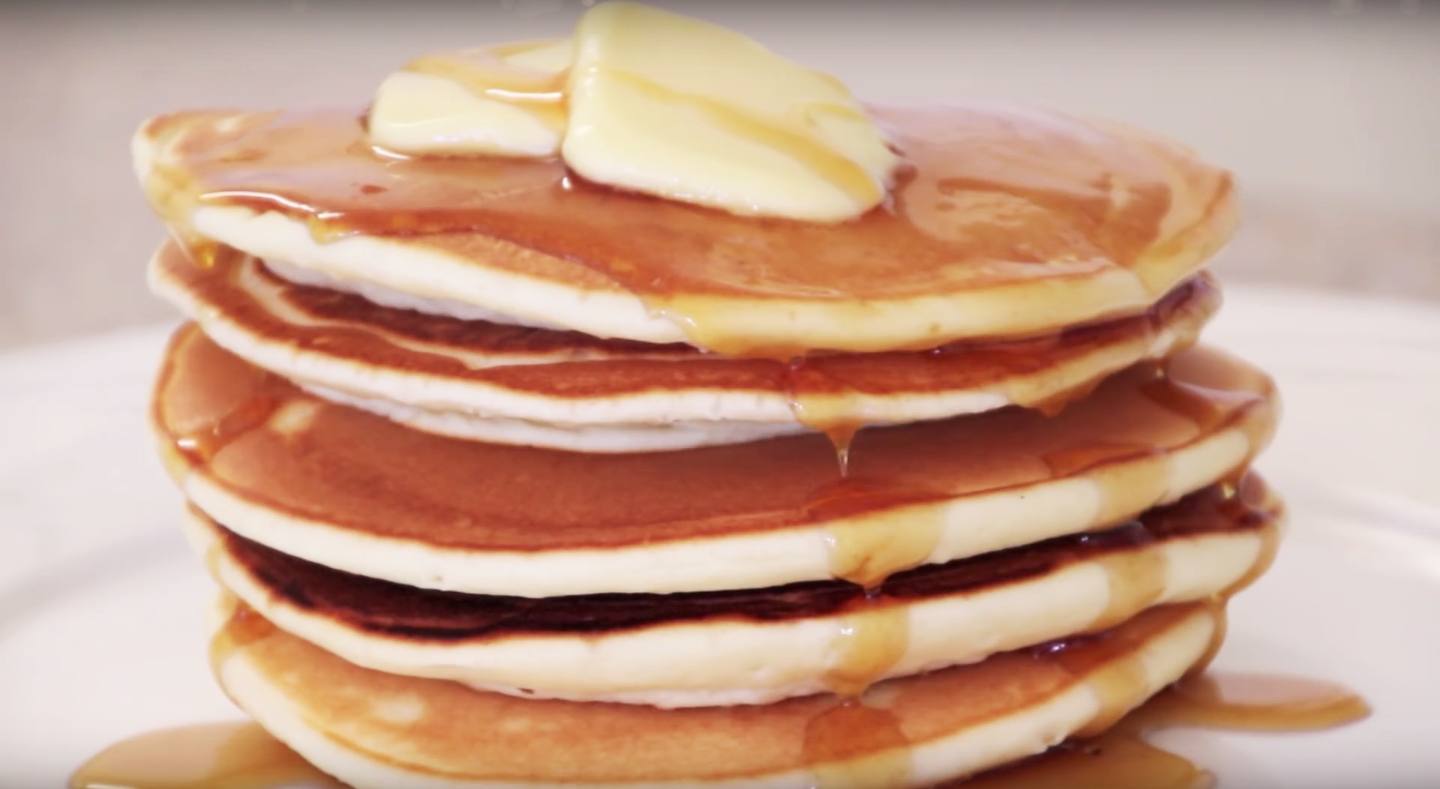
Luckily for me, after pages and pages of google searches, and reading the most opposing articles I found a grey zone in the breakfast debate. Whether or not we can prove that breakfast is any more important than lunch or dinner—that’s debatable.  It’s obvious that all meals are valuable, but one thing is absolutely clear—even the breakfast naysayers have to admit that eating breakfast come with serious perks!
Screen Shot 2015-11-23 at 4.10.06 PM

Firstly, ain’t nobody got the time to be hangry! You probably know the word and the feeling, but let me break it down for you as simply as I know how…Urban Dictionary.

Hangry (adj.): when someone becomes irritated, angry, or cranky when they haven’t eaten and are hungry.
Example-
Allen: I hate you and I want to punch you.
Randy: Why are you so angry with me?
Allen: I’m sorry, I haven’t eaten since breakfast so I’m just hangry, bro.

-Urban Dictionary

Well, it may not always be that dramatic, but let’s face it, you wake up, you hit snooze, and next thing you know you’re out the door before you’ve even had a chance to have a snack, much less eat a meal. No food in your belly, still tired, and likely irritable as a result…you don’t feel all that great. It’s because food is fuel and breakfast is our first chance at taking in nutrients/fuel for the day.  Imagine driving a car with no gas. How can you expect to move with out negatively effecting the other components of the vehicle.  Your body is very similar. We need nutrients to function fully and effectively.
Screen-Shot-2015-06-02-at-11.53.39-AM

Kid’s are a huge factor in studying the importance of breakfast, because they’re bodies are in an extreme state of change and growth—as are all of our bodies to some degree, even if not as rapid.  Studies showed that on average, children who consume breakfast achieve higher academic accomplishments, have higher IQ scores, and had reduced absenteeism and tardiness. I’d like to think it’s because the kids weren’t distracted by their “hanger,” but fact is there are a lot of factors that go beyond hunger and adolescence.

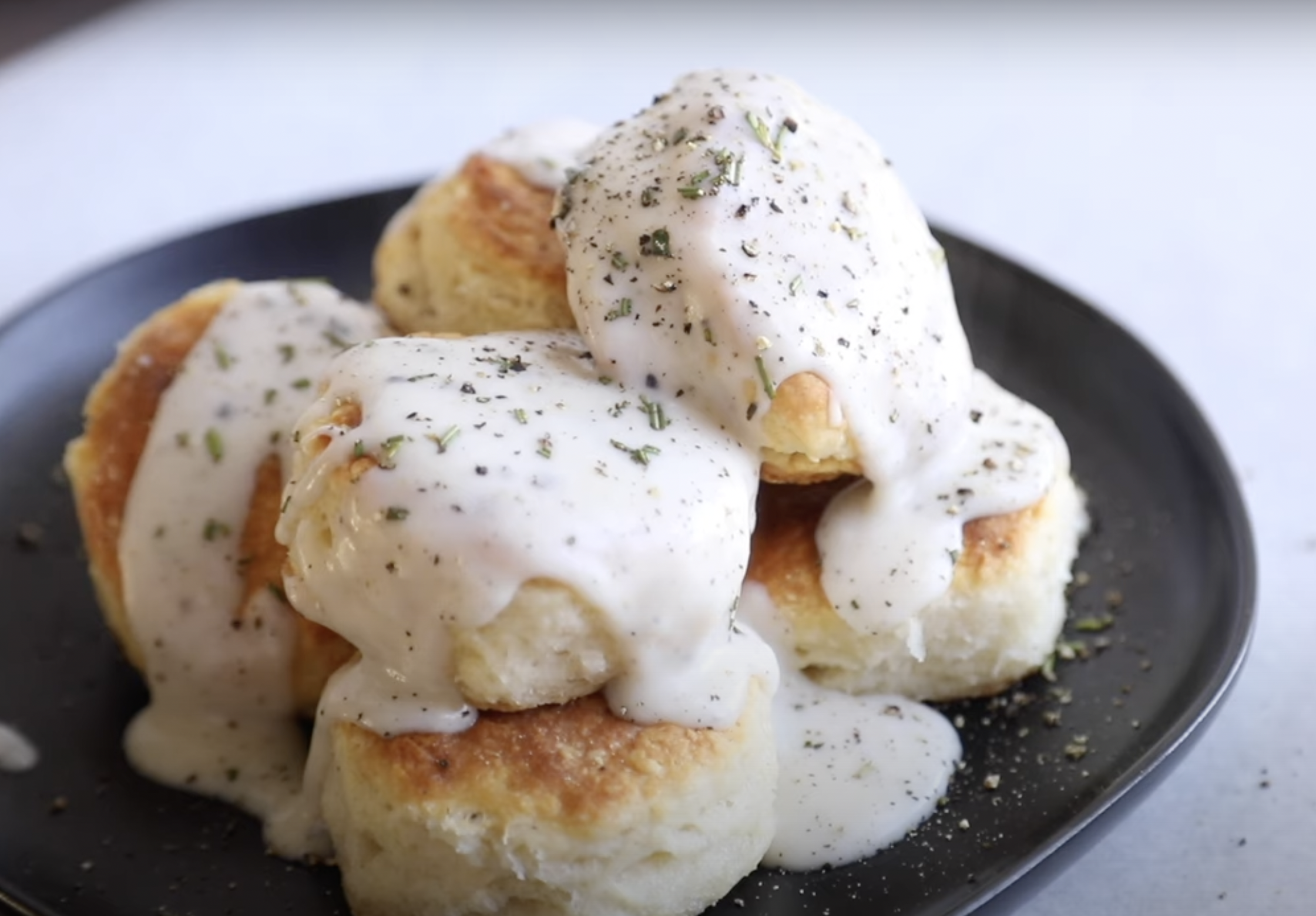
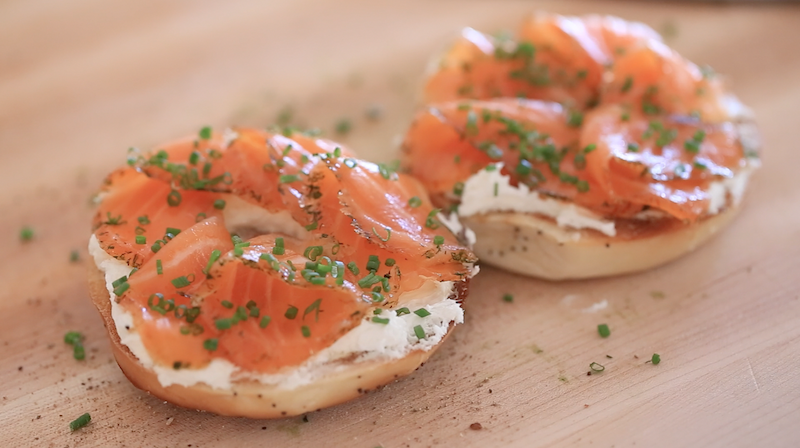
 Your metabolism, at any age, is a huge factor in your health and can definitely be affected by what and when you eat! After all, breakfast is exactly what it sounds like—a “break” from “fasting.” After sleeping all night, eating breakfast is the first signal our bodies get to wake up our metabolisms and start converting calories into energy. If you’re skipping breakfast, or meals in general, your metabolism doesn’t get the memo.  Instead it stays dormant in a sense. Rather than burning calories, we start to store calories.  This means instead of creating energy, our bodies are actually storing it for later, which can lead to excess fat build up…So basically, skipping breakfast can make you tired, irritable, and fluffy…I say “pass the eggs and fruit please!”
Screen-Shot-2015-02-09-at-9.31.07-AM

For me, the best part of breakfast is setting a routine. A routine to eat regularly, which maintains an efficient metabolism. A routine that leads your mind to associate waking up with pleasantries, like an abundance of energy, a full belly, and best of all—some quality social time. Eating breakfast as a family, with friends, or over a local newspaper is the best way to kick start your day with social interaction and/or awareness, stimulating your brain functions, and consequently building an even stronger bound with your loved ones and/or community.

Breakfast may not be for everybody, but it can certainly affect everybody in a positive way.
Food for Thought

It’s All About The Mozzarella

November 24, 2015

The history of mozzarella is debatable, but delicious! As for who really made it first—we can’t be sure. Where was it made—Italy. How was it made—water buffalo. As to where the water buffalo came from in the first place and as to when they arrived to Italy…not a clue! 

In fact, the water buffalo were discovered by the Italians at some point in the 12th century, simply wandering around abandoned farmland. They were new to the Italians and they were rare.  Best yet, the Italians utilized them to create a new type of cheese.  The same cheese that would go on (in a variation of recipes) to be the single most popular cheese in the United States; and one of the most popular cheeses to ever come out of Italy—Mozzarella.

IMG_5180-1024x682

Photo Credit: AmbitiousKitchen.com

Unfortunately, or fortunately, the recipe did have to evolve with the times. As the popularity of the cheese grew, so did the rarity of the water buffalo. By the time the recipe reached the United States in the 20th century, it has gone from being produced from water buffalo, to cows. A natural substitution, but certainly less efficient. It takes approximately 30% more cow milk, to produce the same amount of mozzarella than that of buffalo. Fortunately, you can still find the traditional recipe in some specialty stores and all over Italy; as over time they’ve increased their water buffalo population to maintain tradition.

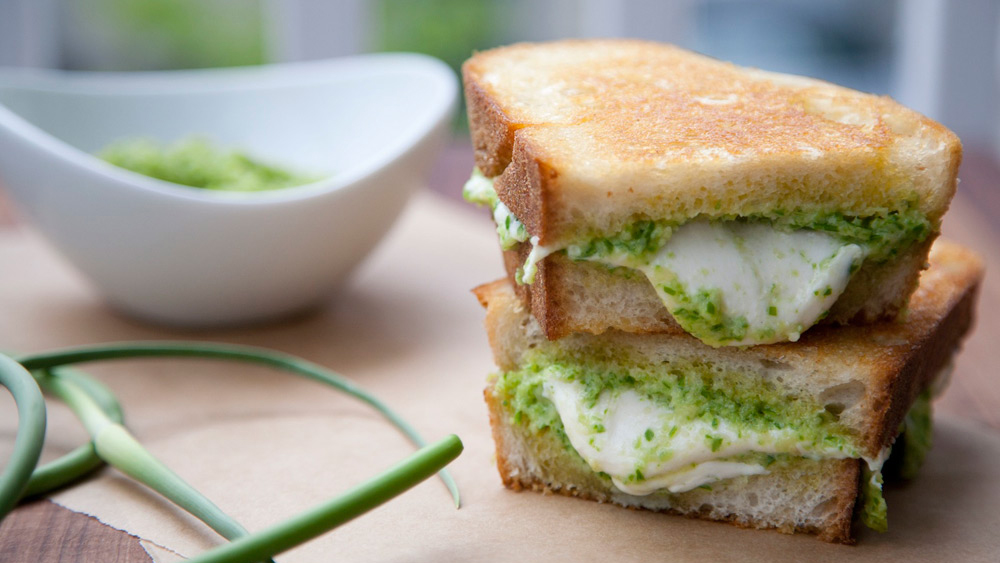
2013-07-08-r-garlic-scape-pesto-mozzarella-grilled-cheese

Photo Credit: NoshOn.it

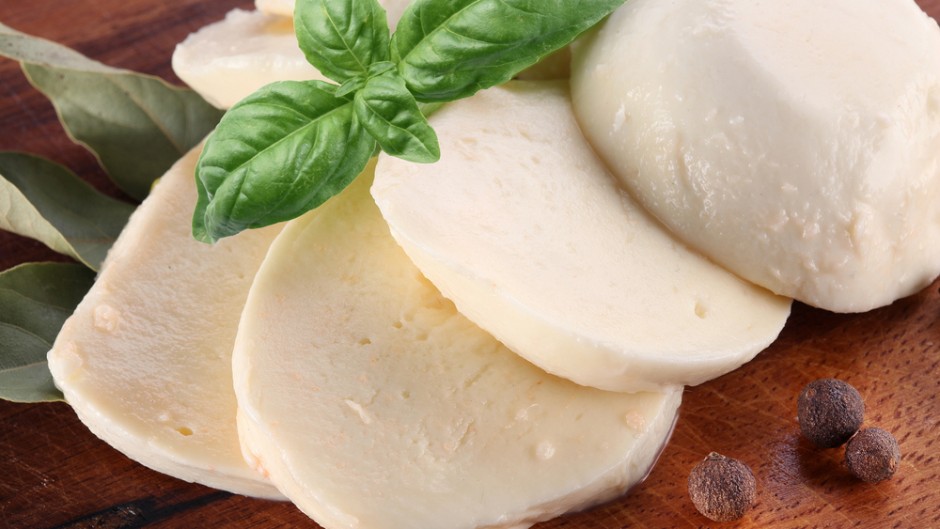
Milk type aside, there are several types of mozzarella: “Buffalo” Mozzarella, Bocconcini, and processed.  Buffalo Mozzarella is the freshest and is made by stretching and kneading warm cow’s-milk cheese curds (buffalo in Italy) into large balls of of mozzarella cheese. They’re then packed in salt water or whey, and shipped to local specialty groceries.  The biggest crowd pleaser of all the mozzarella’s and typically the most expensive, given it’s short shelf life.  It should be soft, mild and tastes of fresh milk. Bocconcini, meaning “little bites” in Italian, are simply mini sized Buffalo Mozzarella balls, about the size of an egg. They originated in Naples and are often found marinated in oil and spices. Lastly, Processed Mozzarella, the most common of the three. It’s mozzarella that has been pressed, rather than stretched.  This type of cheese is much drier (as much of the moisture is removed during pressing) and has an even milder taste.  It can be found in blocks of cheese at almost any grocery store and is what we use for shredded mozzarella.

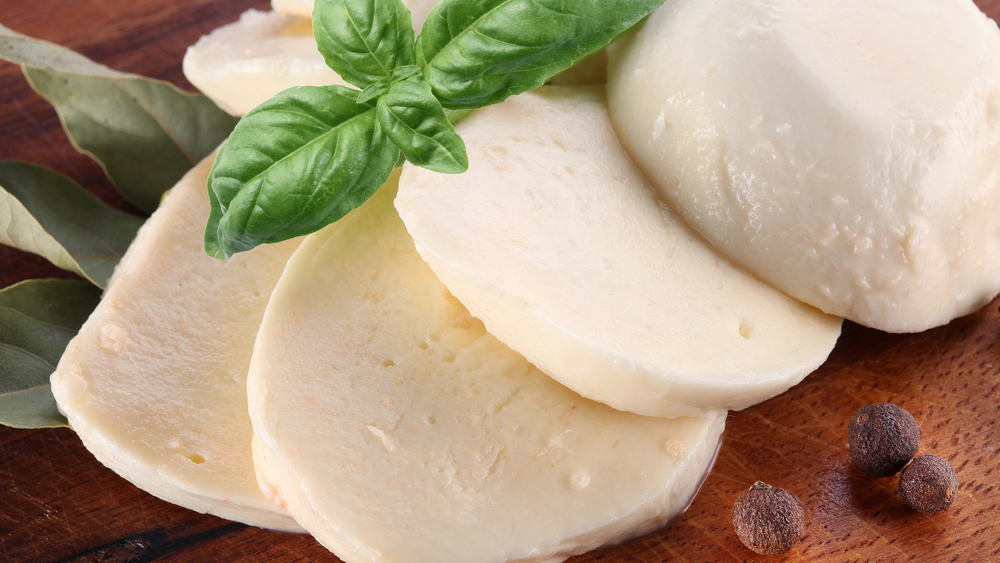
Mozzarella-cheese-and-basil-on-a-wooden-board-

Photo Credit: WalksOfItaly.com

Now as to which version of mozzarella you prefer: buffalo, cow, fresh, or pressed—or how your like to eat it: freshly sliced on tomatoes, baked, or simply by itself—one thing is clear.  We love it for #PizzaWeek! Not to say the nuttiness of Asiago, the smokiness of Gouda, or the savory aspects of Gruyère couldn’t make for one epic pizza, and have…but there’s something so natural  and so right about topping a pizza with with fresh mozzarella. It’s mild and it’s milky. Always fresh and bakes like a dream. And who could argue that the best part of eating pizza isn’t the race to gather all the strings of ooey gooey melted goodness before someone else does?! It’s basic fact and I love it.

Desserts, Main Course, Sides

Pacific Pairings

November 23, 2015

 There’s something to be said about treating your family or friends, to a full-course meal—first, second, third. Just the idea is romantic, and by all means necessary on occasion. Either at home, in an intimate setting, or out and about at a local favorite hot spot, it doesn’t matter…sitting down for a meal can often be all you need to truly unwind and create memorable moments and experiences for your family and friends.  

My family has this new found obsession with all things seafood—fresh fish, fresh ingredients, grilled, seared, sushi, it doesn’t matter. We love it, and surprisingly, so does Oliver! Our little guy barely likes beef and chicken, but fish…that’s his jam! Feeling inspired by this, I decided to create a “Pacific Pairings.”  I wanted to put together a meal that would serve as a bit of escapism from the everyday hustle. 

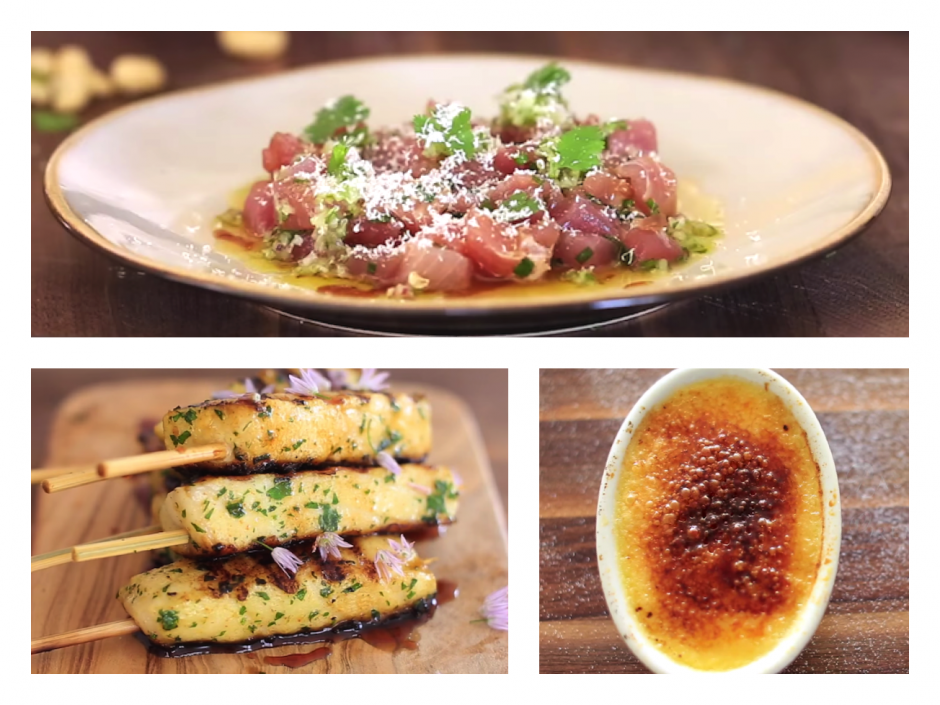
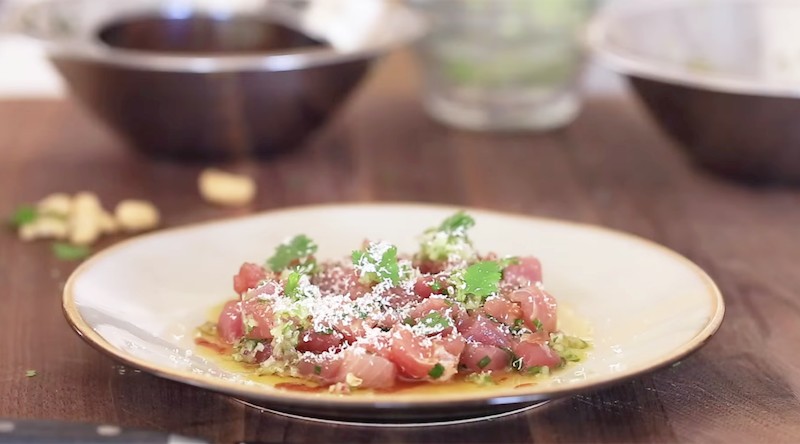
Taking it to the Tropics, first course is a fresh and light Ahi Poke Appetizer with shaved cashew.


Poke

[yumprint-recipe id=’7′]


Hopefully you’re enjoying the direction this meal is going.  There’s something humbling about treating your friends and family to an appetizer, or hors d’oeuvre, before diving straight into the main dish. If you want to save this appetizer recipe, I’ll have this and the following two courses all featured on the Today Food Club. This post is being sponsored by NBC’s Today Food Club, because they’re launching a new club where foodies like myself can share recipes with thousands of others! I think it’s pretty cool, so be sure to show them some love and sign up.

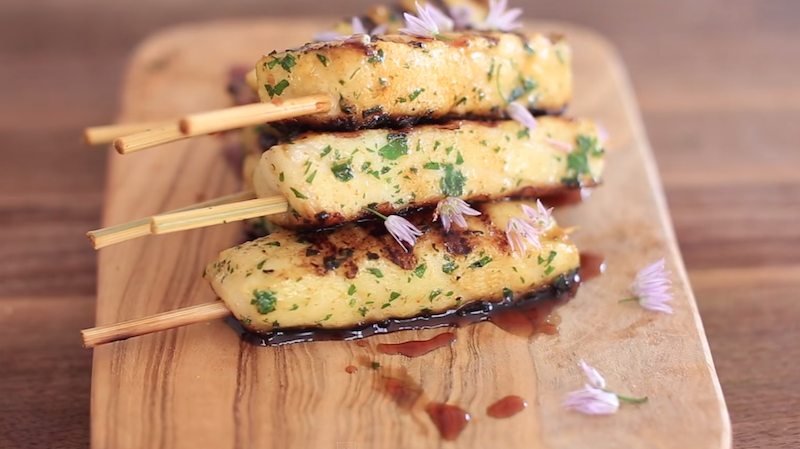
Next up we have a juicy and tender Sweet and Sour Sea Bass. This course is sensationally mouth-watering!


Screen-Shot-2015-05-18-at-8.13.25-PM

[yumprint-recipe id=’4′]


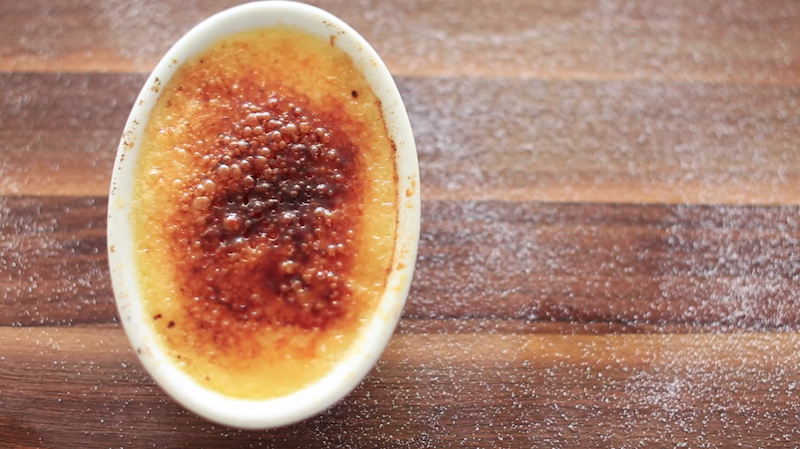
Dessert is a must. It’s the icing on the cake. It should be a sensuous experience where you relish in every bite. Creme Brûlée was actually the first dessert that I ever made my wife, so it holds a special place in my heart. With the addition of a tropical twist, I think it could easily become a family favorite! 

If you have decadent recipes of your own, you can share them with the Today Food Club and be featured on TODAY.com, the TODAY show, and in their newsletter and social media channels. You may even get to cook alongside celebs like Al Roker, Natalie Morales, and  Siri Pinter—but let’s not get ahead of ourselves. If you were to sign up, what would be the first decadent dessert recipe you would share with the world? 

For you, I’ve put together a Passion Fruit Creme Brûlée. It’s truly decadent, yet light and airy. Enjoy!


 Screen-Shot-2014-10-08-at-5.19.34-PM2

[yumprint-recipe id=’5′]


That’s it for my three course “Pacific Pairings.” Hopefully it inspires you to treat yourself, your family, or your friends, to a well thought out, delicious, full course meal.

In need of some more culinary inspiration? The Today Show Food Club really is pretty awesome—and I always love support my fellow foodie communities! Plus…5-day meal plans, pre-made grocery lists, exclusive deals and sweepstakes…well they never hurt anyone! 

Speaking of, if you sign-up you’ll be entered in their current sweepstakes for an all expenses paid trip to NYC, behind-the-scenes access at a TODAY cooking segment and the Ultimate Cookware and Cutlery Giveaway from ZWILLING J.A. Henckels! Ends November 30th.


Good luck foodies and hope you enjoyed this pairing.

Food for Thought

It’s All About The Sauce

November 21, 2015

Would you believe me if I said the creation and craze over pasta sauces are the direct result of Pizza being invented? Flash back to my Pizza Toppings 101 post and you’ll remember how a queen’s visits to Naples inspired the first coveted pizza recipe:

The story goes that it was created by one restaurateur in Naples to celebrate the visit of Queen Margarite, the first Italian monarch since Napoleon conquered Italy. The restaurateur made the pizza from three ingredients that represented the colors of the new Italian flag: red, white, and green. The red is the tomato sauce, the white was the mozzarella cheese, and the green was the basil topping. Hence, Pizza Margarite was born, and is still the standard for pizza.

It’s said that from that point on tomatoes became a common ingredient in kitchens worldwide. If true, that would mean a whimsical homage to the Italian colors led to the creation of pasta (really pizza) sauce; sparking a future multi-million dollar industry, making the once irrelevant tomato a prized crop, and causing a domino effect of countless variations of sauces to be invented. A plethora really, and today I’m going to break down the most common variations that you’ll find on most grocery shelves—and we have pizza to thank.

20-minute-pomodoro-sauce-4b0ab39f4ab1f846de0112e9ece8f2072a0a4326

Photo Credit: GarlicAndZest.com

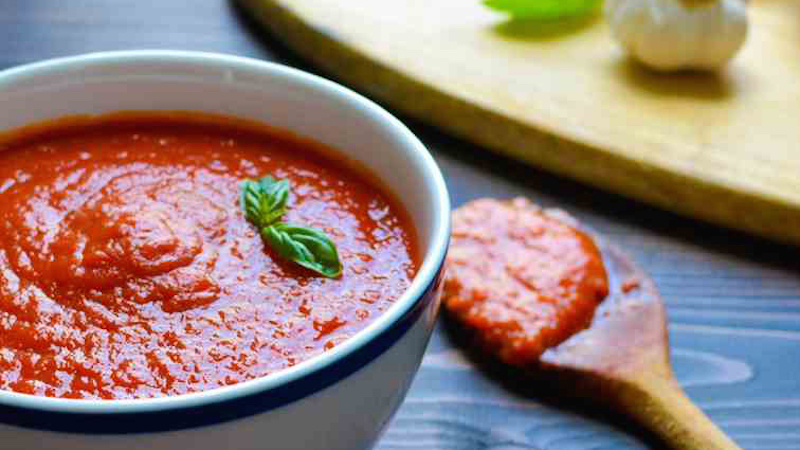
Let’s start with the most common tomato based sauces. A Pomodoro  sauce is a purely tomato based sauce. The first tomato sauce to come into existence really. It was only a matter of time before spices were added to the mix and the invention of Marinara came into play. It’s a basic tomato sauce seasoned with onions, garlic and oregano. Simple, classic, and a crowd pleaser! Also, the most common sauce used on pizzas today. If you add onions, black olives, anchovies and capers, simmer it all in olive oil, you have a classic Puttanesca sauce.
Shortly there after, meat become an addition to many tomato sauces. A natural integration to the sauce world, ground beef, pork, and/or pancetta, in addition to tomato sauce, make for a Bolognese. 

Screen-Shot-2015-11-02-at-1.55.21-PM

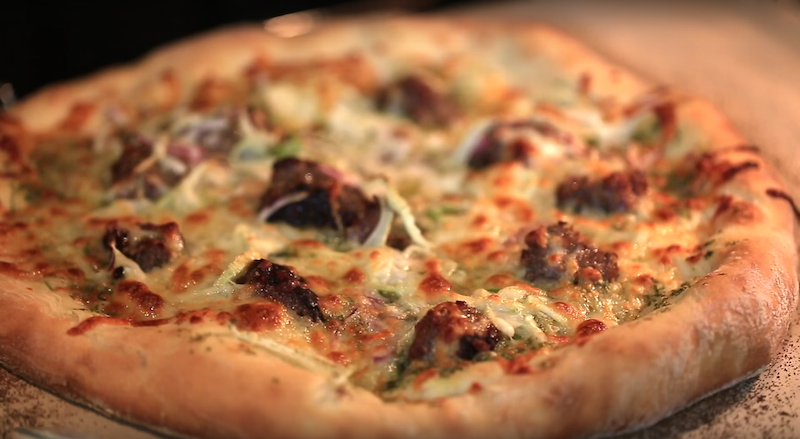
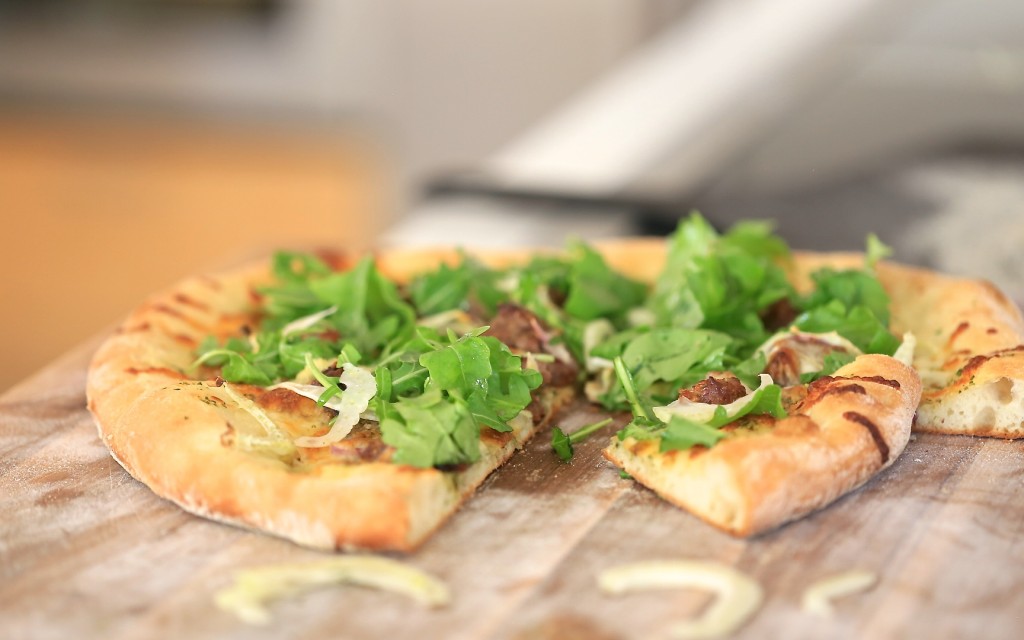
Fennel and Sausage Pizza in the making.

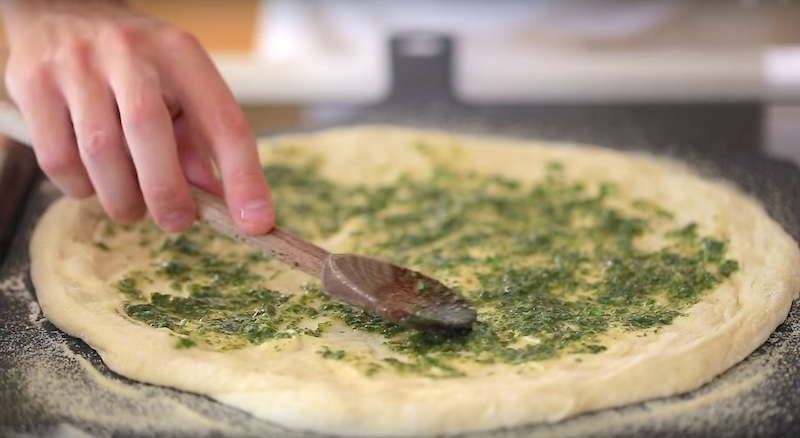
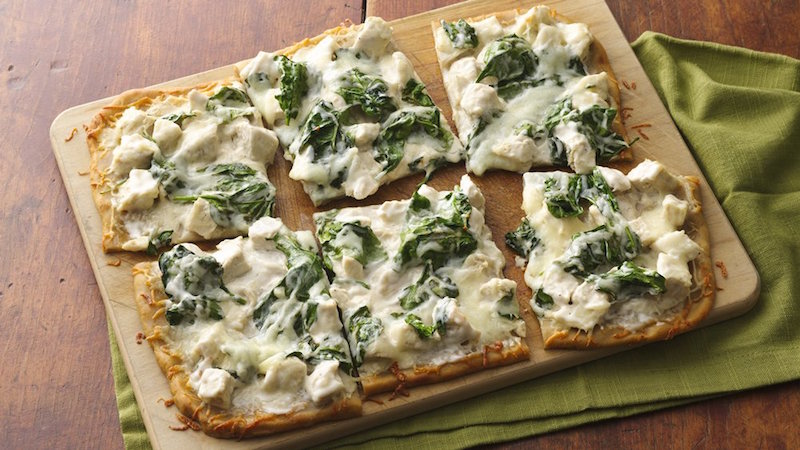
Some Sauces are not tomato based. Take one of my favorites, Pesto. Still an Italian invention, pesto is often used to top pizzas and pastas alike, but contains no trace of tomatoes.  It’s actually a combination of crushed basil, pine nuts, garlic, parmesan, and olive oil. Another tomato free option is Alfredo. A rich and creamy sauce made with heavy cream, butter, freshly grated Parmesan cheese and freshly ground black pepper. Typically found on fettuccine, but recently a trendy pizza sauce option as well.

20934fb5-5414-4879-9900-434f69103b72

Photo Credit: Pillsbury.com

Some sauces even have an alcohol and cream base. Vodka sauce is made of a tomato base, mixed with Vodka, and heavy cream. Perfect for penne pasta, but I have yet to try this on a pizza…to do or not to do? Another option would be a Marsala sauce. This is a wine-based pasta sauce made with Marsala wine, heavy cream, and parmesan cheese. As the sauces simmer the alcohol cooks off and the result is a rich and creamy sauce. 


Of all these sauces, which do you typically make at home? MORE importantly, what’s your “secret” ingredient?
Can’t wait for the feedback!

Main Course

Deep Dish Pizza

November 18, 2015

I couldn’t post about Deep Dish vs. Thin Crust, with out giving both a try for myself! This ‪#‎PizzaWeek‬ I’m making the ultimate Deep Dish Pizza! It’s thick, saucy, and has mounds of baked cheesy goodness in every bite! Let’s dive in.

Screen Shot 2015-11-18 at 2.13.04 PM

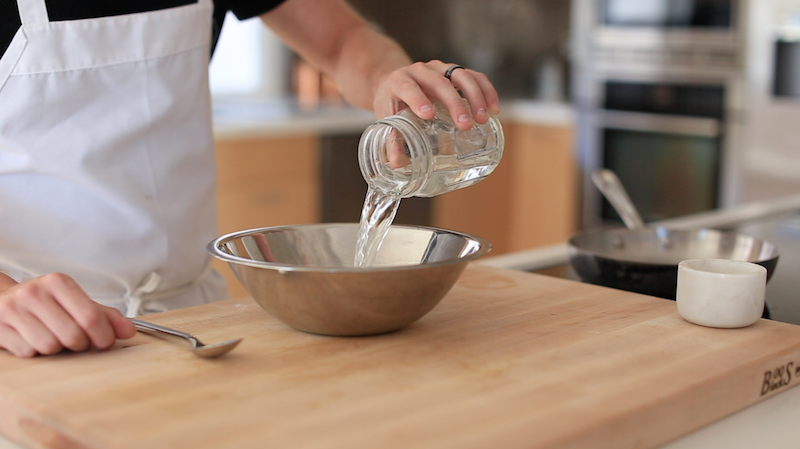
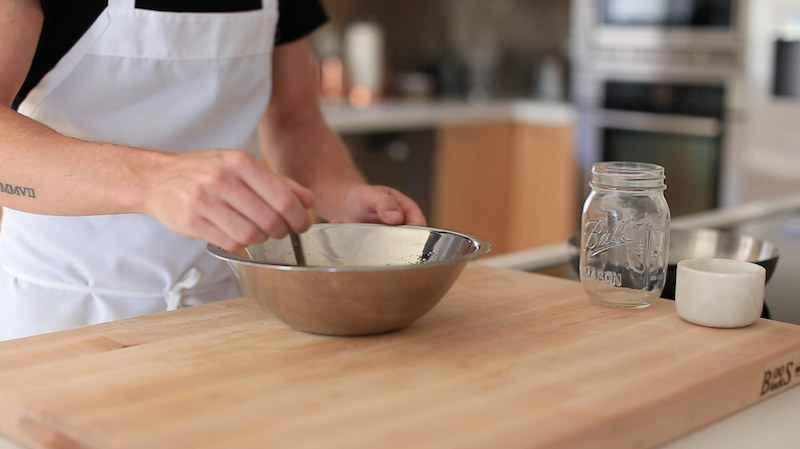
Add 1 cup of warm water to a mixing bowl.

Screen Shot 2015-11-18 at 2.13.19 PM

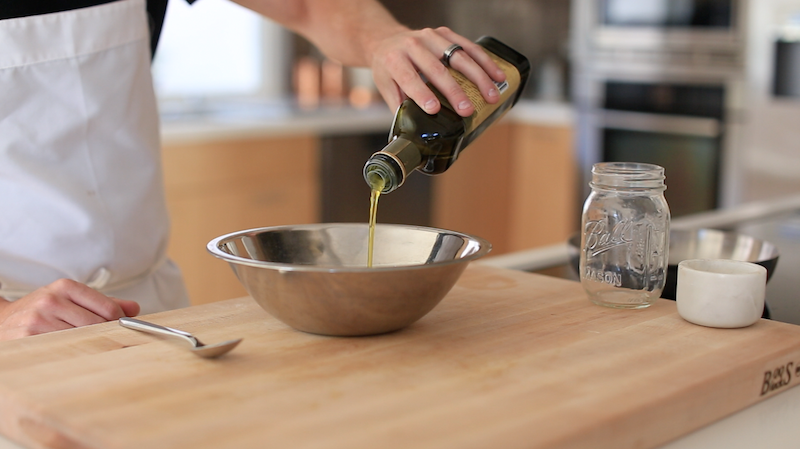
Add 3 tbsp olive oil…

Screen Shot 2015-11-18 at 2.13.31 PM

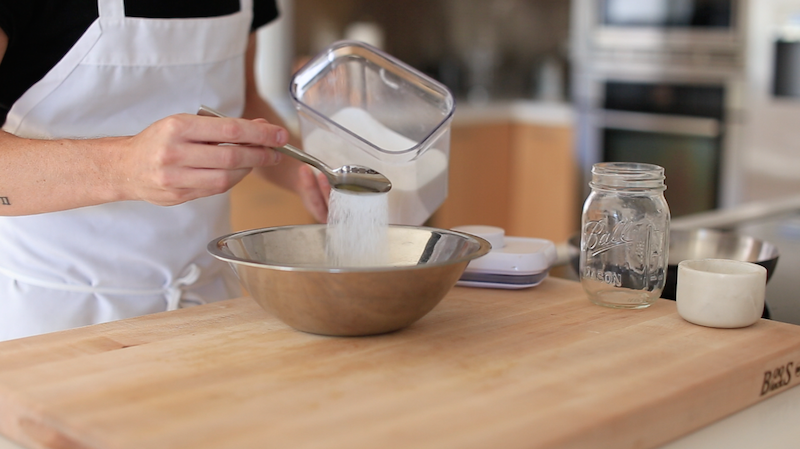
 …1 tbsp sugar…

Screen Shot 2015-11-18 at 2.13.43 PM

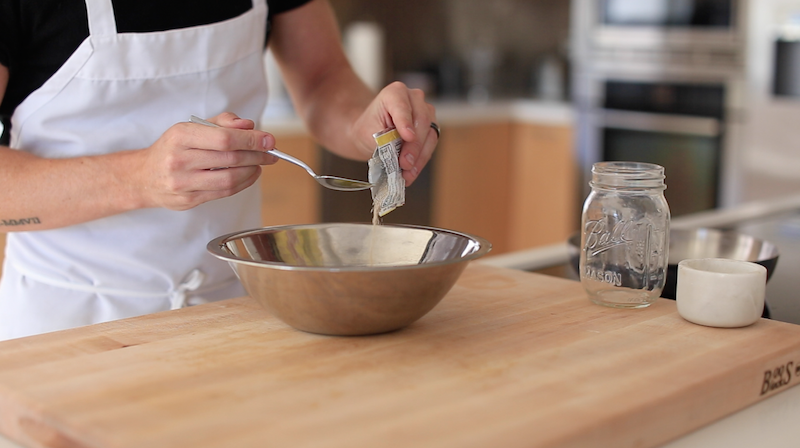
…1/2 packet (1/2oz) of dry active yeast…

Screen Shot 2015-11-18 at 2.14.03 PM

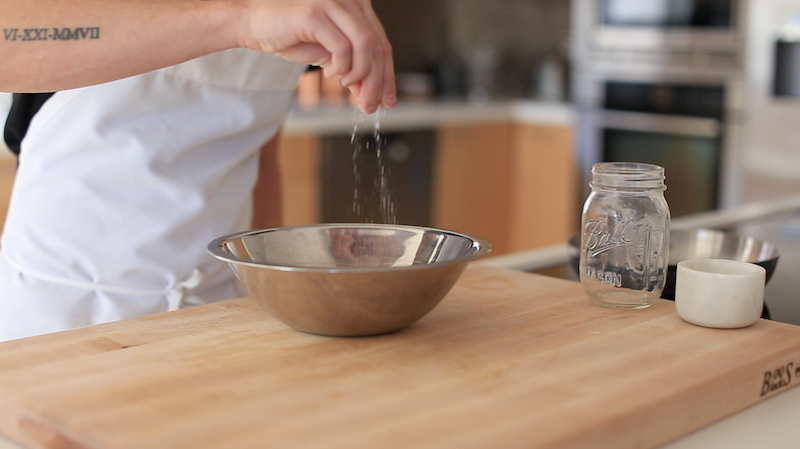
…and a pinch of salt.  

Screen Shot 2015-11-18 at 2.14.22 PM

Combine mixture for 2 minutes, then set aside and let rest for 10 minutes.

Screen Shot 2015-11-18 at 2.14.37 PM

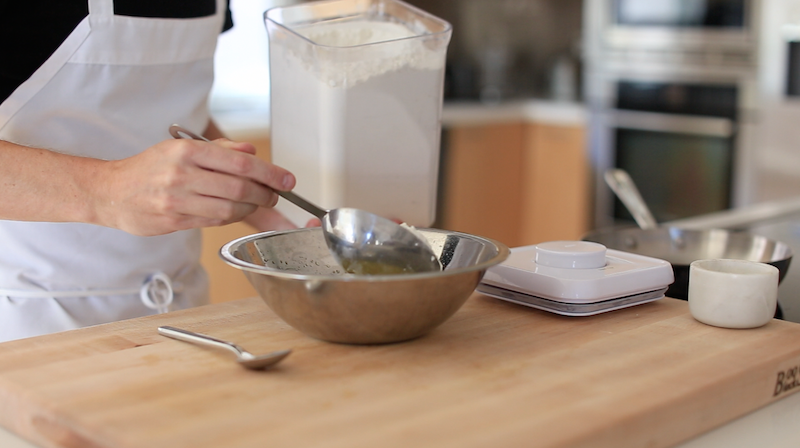
Add 1 cup of bread flour…

Screen Shot 2015-11-18 at 2.14.52 PM

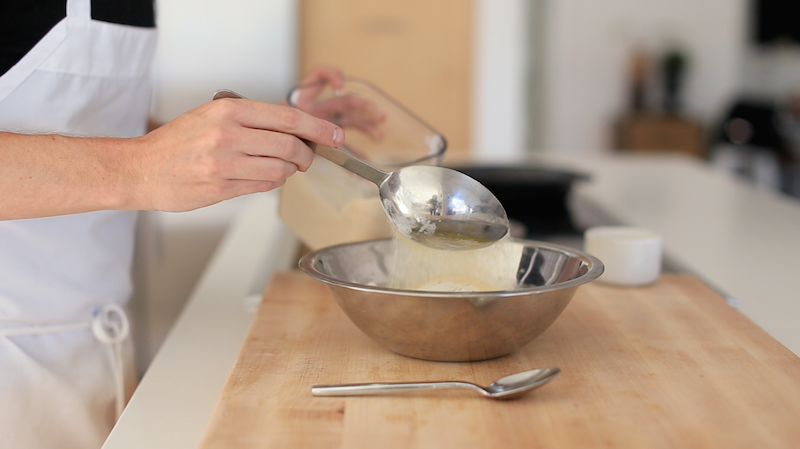
…and 1/2 cup of semolina flour to the mixture.  

Screen Shot 2015-11-18 at 2.15.16 PM

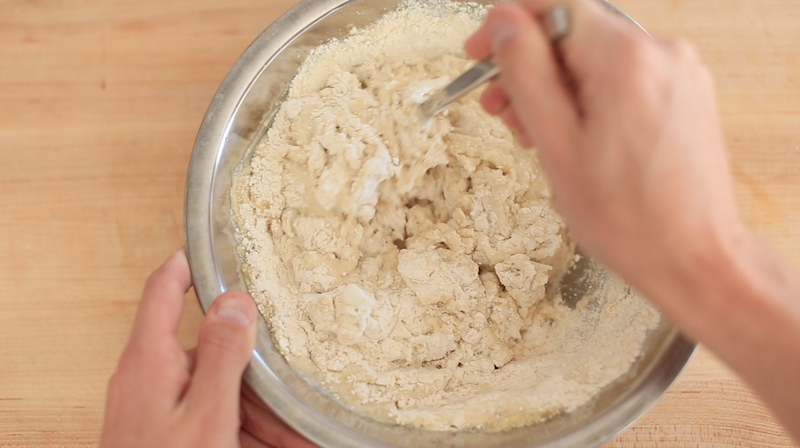
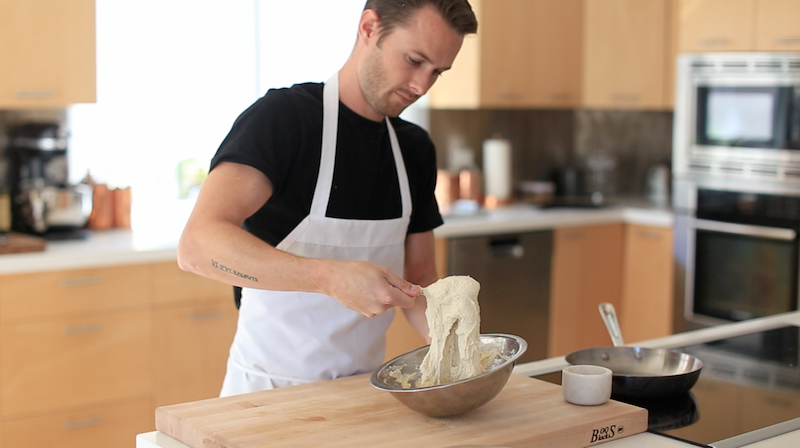
Fold in the flour for 5-7 minutes.

Screen Shot 2015-11-18 at 2.15.32 PM

Once the dough has a tacky consistency…

Screen Shot 2015-11-18 at 2.15.59 PM

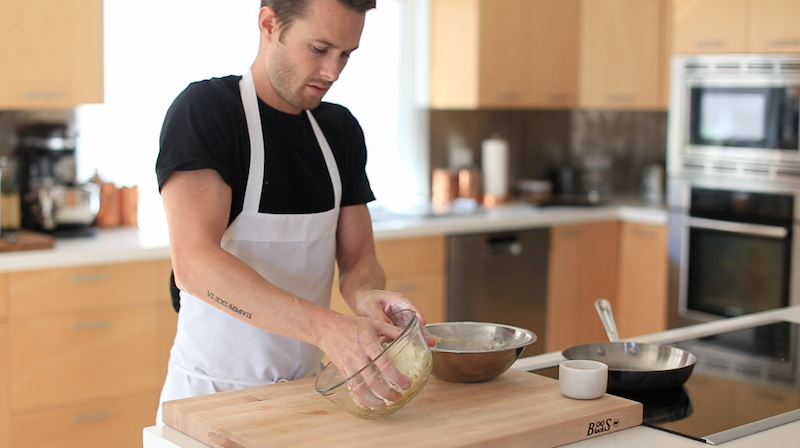
…transfer to a well oiled bowl—about 1 tbsp of olive oil.  

Screen Shot 2015-11-18 at 2.16.18 PM

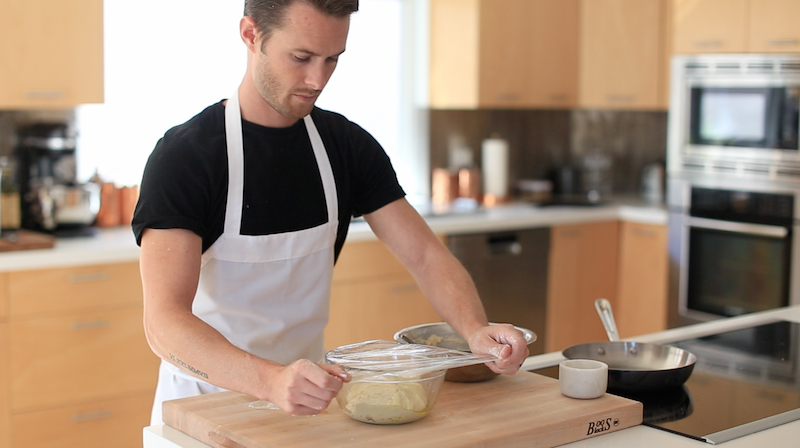
Coat outside of the dough with oil and cover bowl in plastic wrap.

Screen Shot 2015-11-18 at 2.17.24 PM

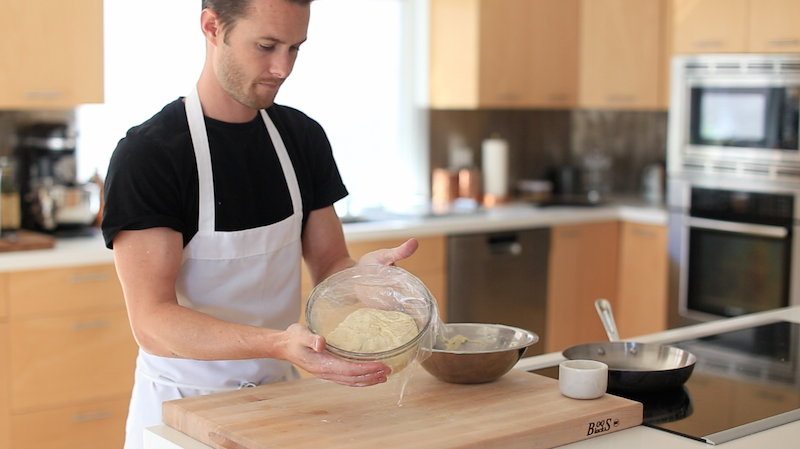
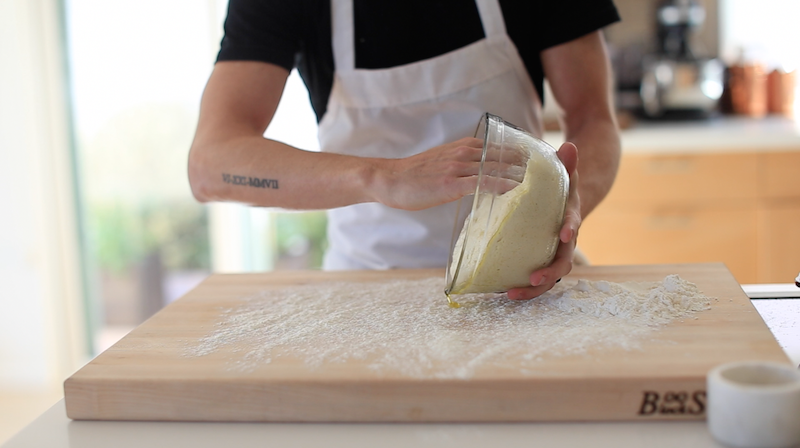
Let dough proof for 20 minutes in a warm and shaded area.

Screen Shot 2015-11-18 at 2.18.17 PM

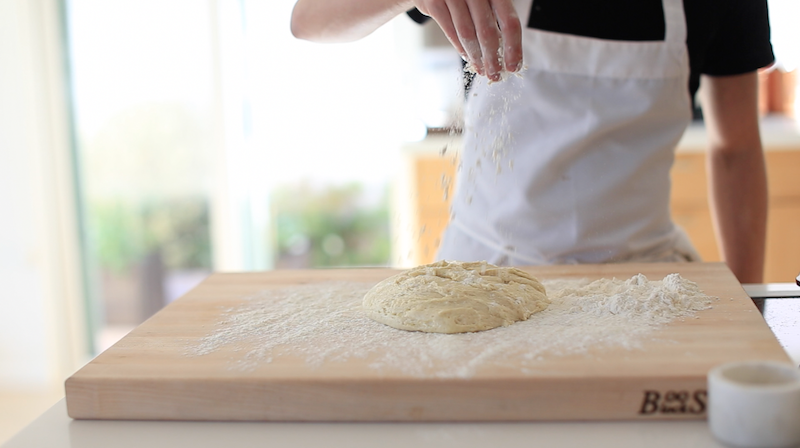
Once the dough has doubled in size, transfer the dough to a floured work surface.  

Screen Shot 2015-11-18 at 2.18.31 PM

Sprinkle flour on top of the dough.

Screen Shot 2015-11-18 at 2.19.40 PM

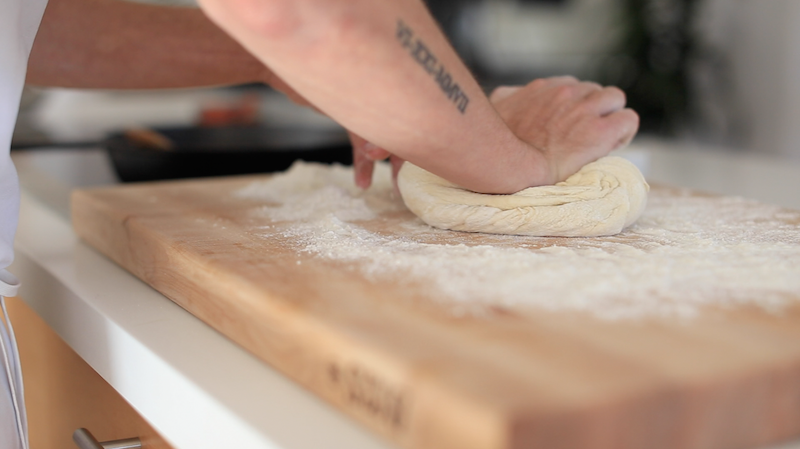
Begin to knead the dough for 2-3 minutes.

Screen Shot 2015-11-18 at 2.20.13 PM

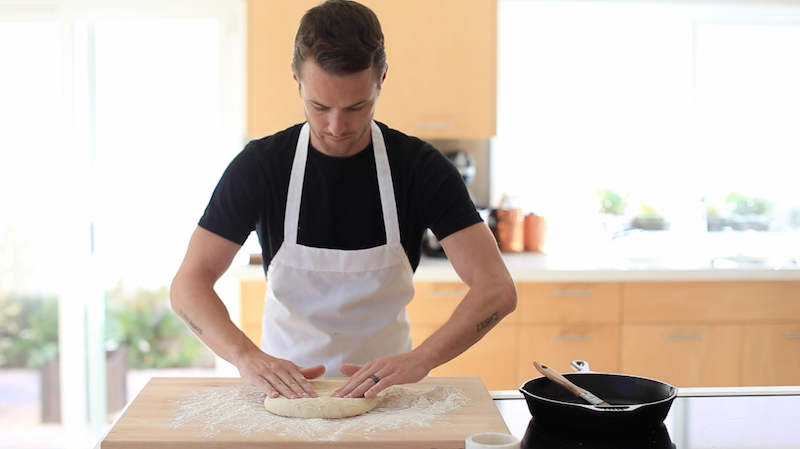
Press the dough out into a circular shape, just smaller than the size of your iron skillet.

Screen Shot 2015-11-18 at 2.20.27 PM

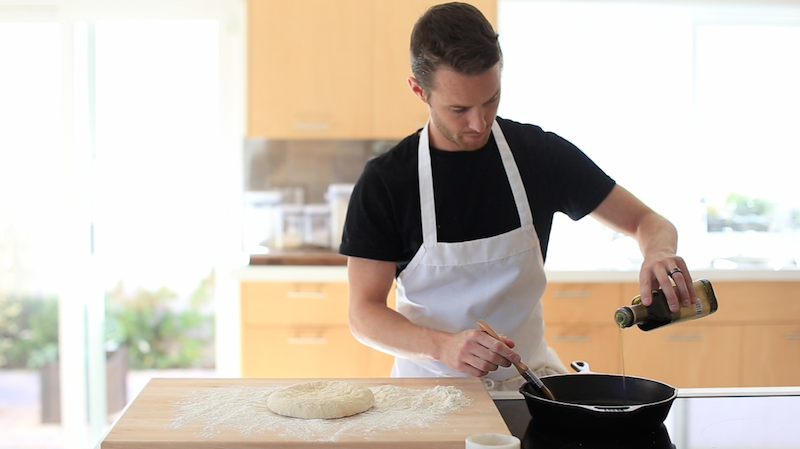
Coat the iron skillet in with olive oil…

Screen Shot 2015-11-18 at 2.20.53 PM

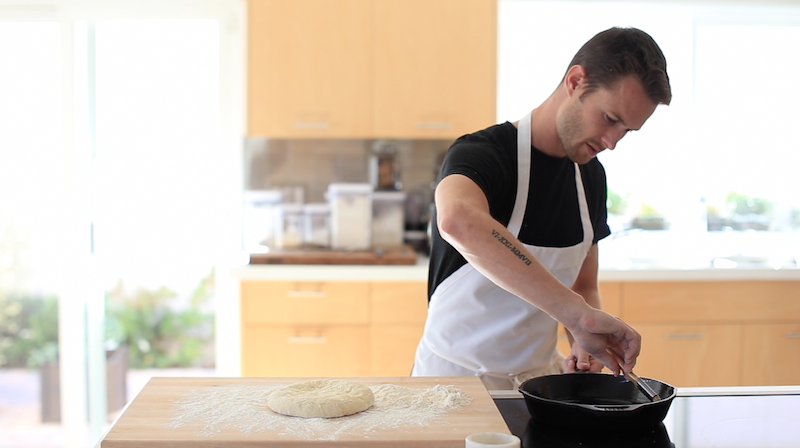
…and use a pastry brush to make sure the entire surface, and sides, are coated in oil.

Screen Shot 2015-11-18 at 2.21.17 PM

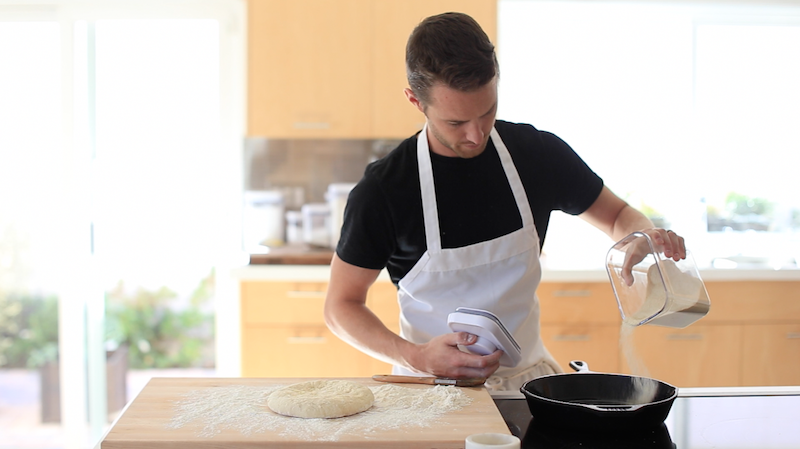
Add 2 tbsp’s of semolina flour the oiled skillet.  

Screen Shot 2015-11-18 at 2.21.53 PM

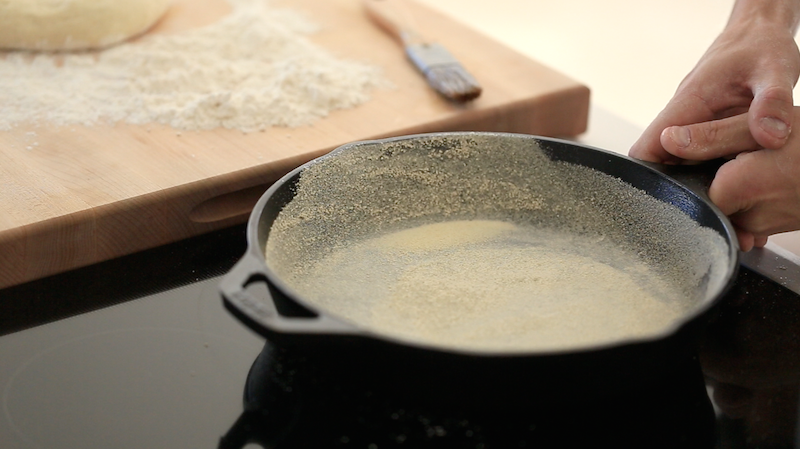
Move the skillet around until the flour has evenly coated the entire pan, sides included (add more semolina flour if necessary). 

Screen Shot 2015-11-18 at 2.22.53 PM

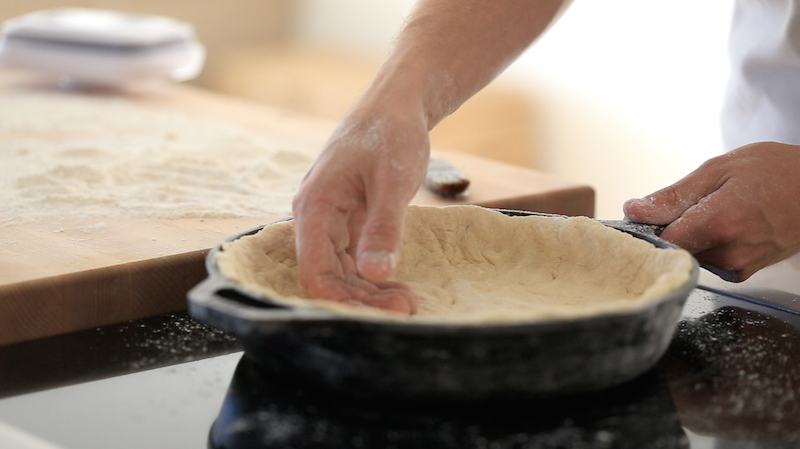
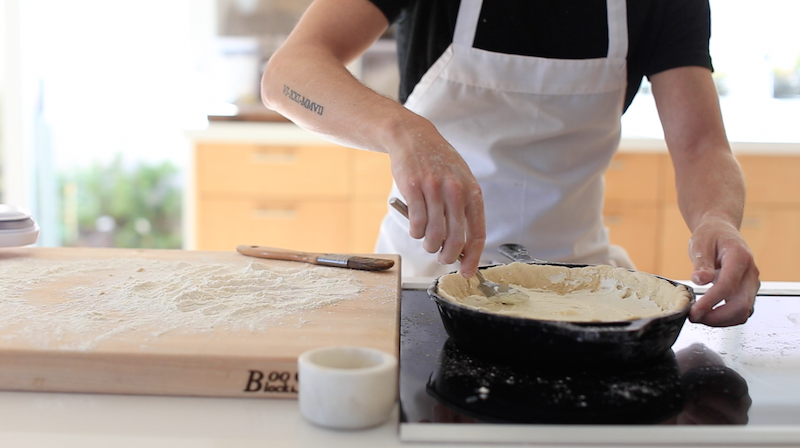
Transfer the dough to the skillet and begin to press it out, up the entire sides of the skillet.

Screen Shot 2015-11-18 at 2.23.34 PM

 Be sure the dough is evenly spread and securely pressed against the skillet. 

Screen Shot 2015-11-18 at 2.24.31 PM

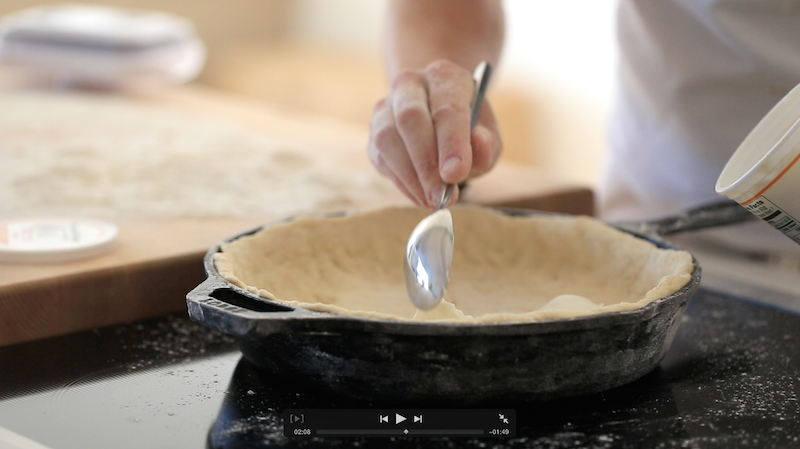
Once the dough has been stretched, you can start topping the pizza by adding 4-5 tbsp ricotta cheese.  

Screen Shot 2015-11-18 at 2.25.13 PM

Spread the cheese evenly around the top of the dough.  

Screen Shot 2015-11-18 at 2.25.36 PM

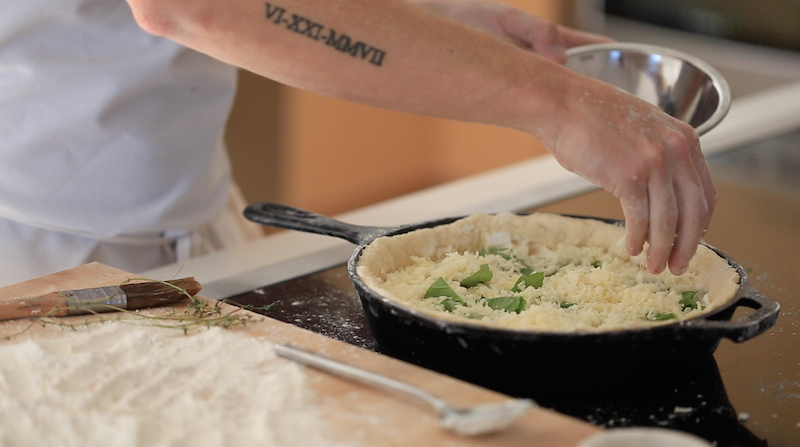
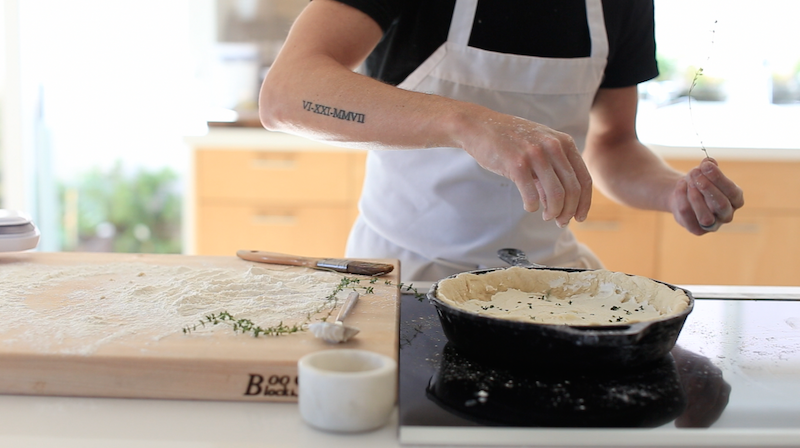
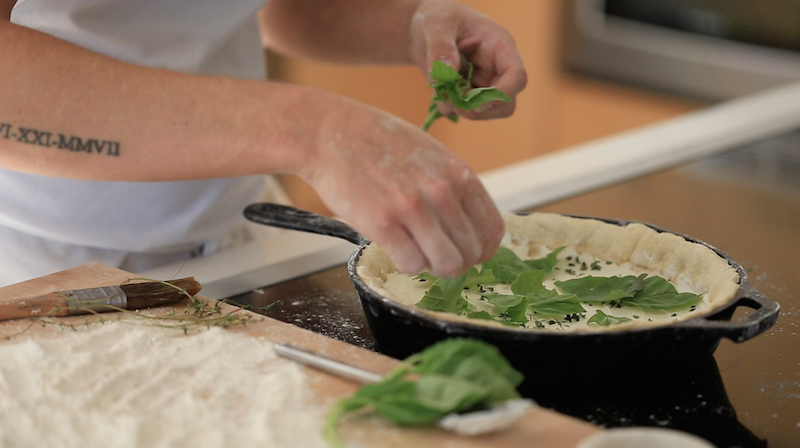
Sprinkle with fresh thyme…

Screen Shot 2015-11-18 at 2.26.03 PM

…fresh torn basil to taste.

Screen Shot 2015-11-18 at 2.26.48 PM

Add 2 cups of a shredded mozzarella on top.

Screen Shot 2015-11-18 at 2.27.43 PM

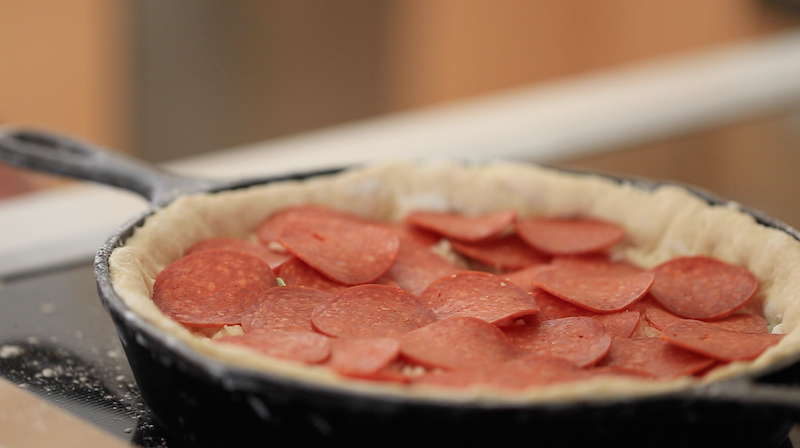
Top with a full layer of spicy pepperoni…

Screen Shot 2015-11-18 at 2.28.44 PM

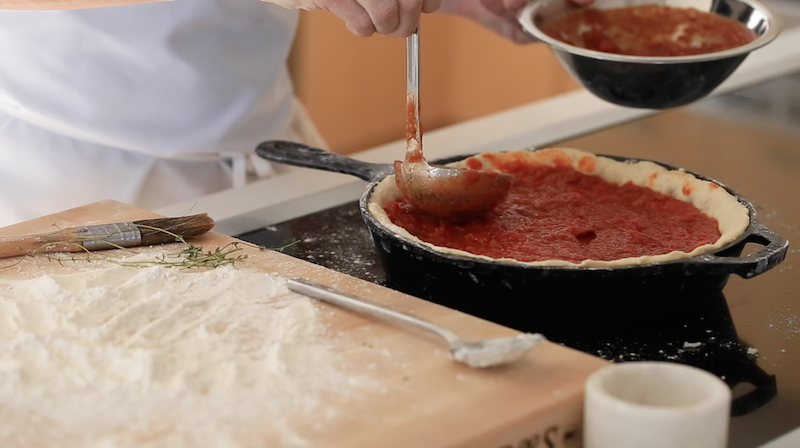
…and cover the entire surface of the pizza with 1 1/2 cups of marinara; spread evenly around the surface.  

Screen Shot 2015-11-18 at 2.29.14 PM

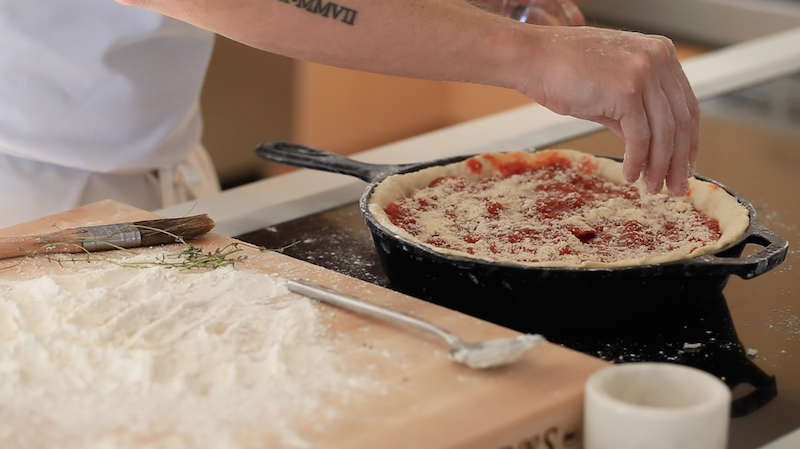
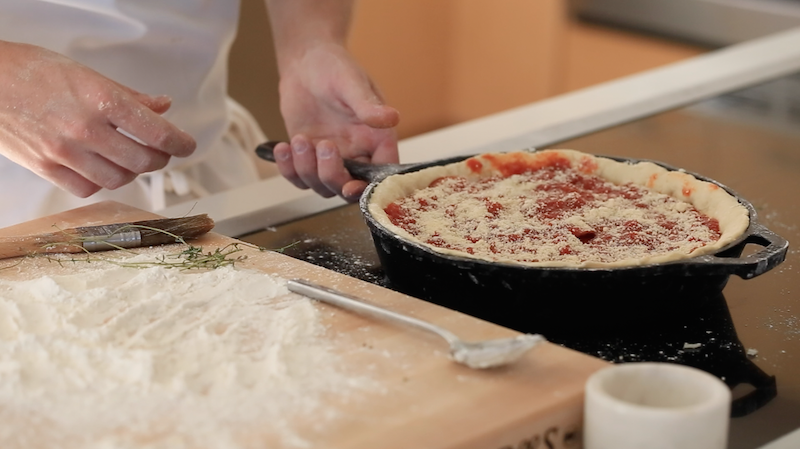
Add a a few dashes of parmesan!

Screen Shot 2015-11-18 at 2.29.45 PM

Place the pizza, skillet and all, in a 400ºF oven for 30-35 minutes.

Screen Shot 2015-11-18 at 2.30.12 PM

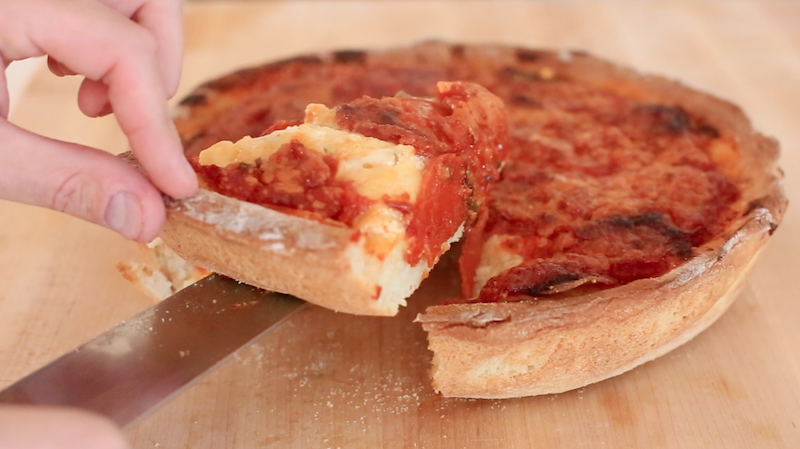
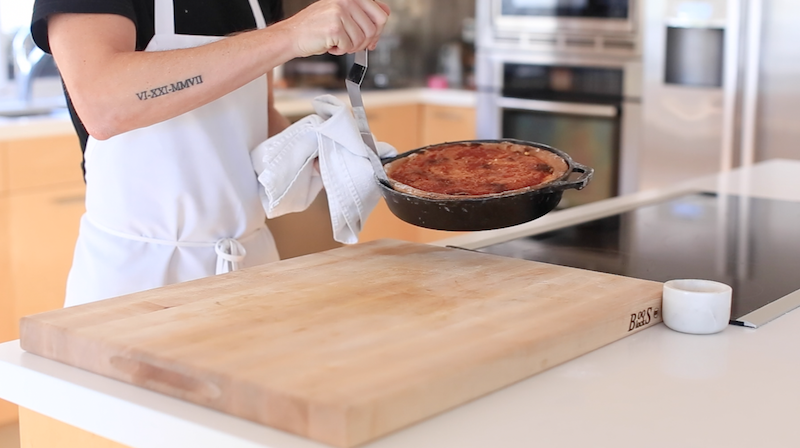
As soon as the pizza crust is a nice golden brown, remove the skillet from the oven.  Use a metal spatula to scrape along the edges and ensure the pizzain not hooked to the pan.

Screen Shot 2015-11-18 at 2.30.38 PM

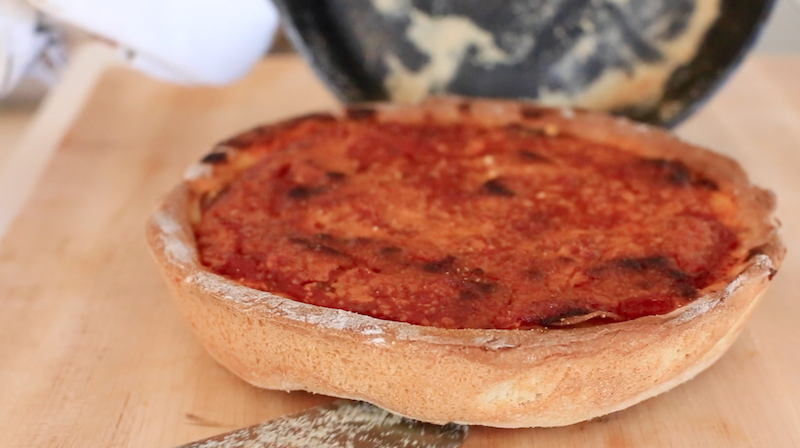
Gently tip the pizza out of the skillet, using the spatula to hoist up the edge.

Screen Shot 2015-11-18 at 2.31.34 PM

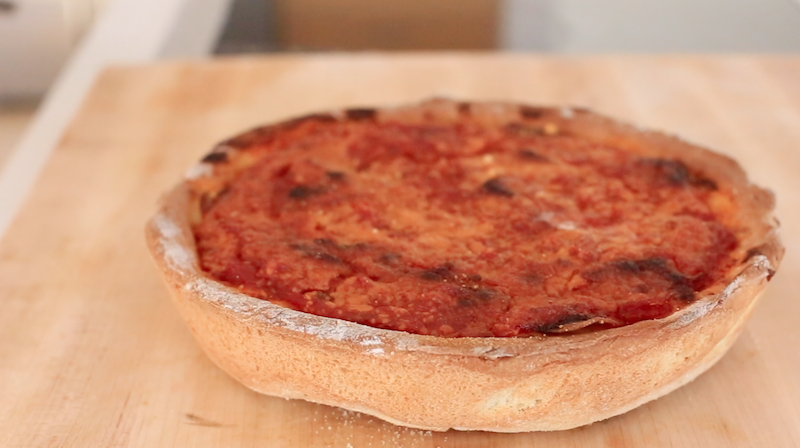
Allow is to cool for several minutes…

Screen Shot 2015-11-18 at 2.32.13 PM

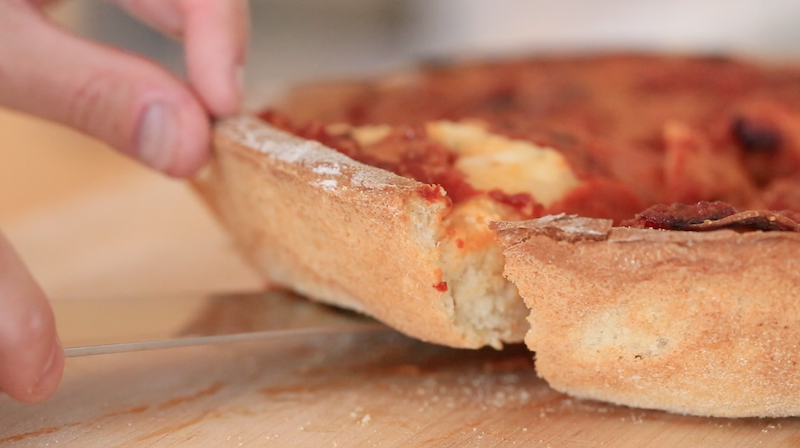
…slice it up and enjoy!

Screen Shot 2015-11-18 at 2.33.25 PM [amd-zlrecipe-recipe:62]

Screen Shot 2015-11-18 at 2.56.19 PM

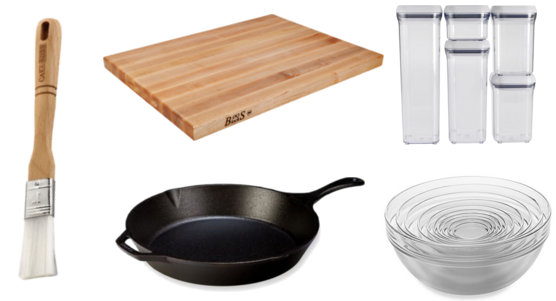
| Left: Basting Brush | Top Middle: Boos Cutting Board | Top Right: Good Grips |

| Bottom Middle: Skillet | Bottom Right: Mixing Bowls |

Food for Thought

101 Pizza Toppings

November 13, 2015

Pizza became a common dish in the poor communities of Naples—in the late 1700’s. And it makes total sense!  Minimal ingredients, minimal expense, and maximum quantity.  Topping them only came naturally to make these cheap pies even more filling; using inexpensive ingredients such as tomatoes, cheese, oil, anchovies and garlic.

Screen Shot 2015-11-02 at 1.58.03 PM

It wasn’t until the late 1800’s that Queen Margherita, of Italy, visited Naples and there in visited a Napoleon pizzeria—Pizzeria Brandi. It was there she fell for a basic Napoleon pizza topped with mozzarella, basil, and sliced tomatoes. It was said to be love at first bite, and so was dubbed the “Pizza Margherita.”

Screen Shot 2015-11-02 at 4.44.57 PM

She brought the tradition back to Italy where it famously gained popularity. The actual Margherita recipe was so coveted that the government coined and enforced the name and recipe That didn’t stop the Italian’s from experimenting with new pizza recipes.  They made famous the heavy use of garlic, as well as chunks of sausage with fennel and anise. They also came up with there well know Italian Blended Cheese, or a shredded blend of mozzarella, provolone, asiago and romano cheeses. Still mixed and used world wide for pizza making.

Screen Shot 2015-11-02 at 4.45.26 PM

As more Italians came to the U.S., so did the tradition of pizza making. During World War II the dishes popularity boomed for similar reasons as it did in Naple’s.  It was inexpensive, delicious, and a true comfort food. They took it a step further by adding another inexpensive topping to bulk up these pies even more. Pepperoni gained massive popularity as is was extremely cheap to buy—made mostly of pork and beef scraps, but was spiced to perfection! American’s fell in love with it and we still treasure it now! Even though we experiment every day with new toppings like BBQ chicken, salmon, bcacon, etc., we still consume 250+million pounds of pepperoni a year. Making pepperoni the most popular topping, bar none. Far second is surprisingly mushrooms, followed by onions, sausage, bacon, olives, green peppers, and pineapple.

IMG_9742

Funny enough the most famous pineapple topped pizza, known prevalently as the Hawaiian, isn’t even that popular in Hawaii.  This dish gained it’s recognition in Australia, Sweden, and Canada.  I can only assumed that’s where Canadian bacon started to take place of the traditional ham topping.

Other countries, like Japan, have popular toppings like squid, potatoes, and bacon.  I’d love to know where you’re from, or where you’ve been, and what is the most popular and native topping that the area has to offer!

Hope you enjoyed food for thought.